Design reference 94 · Avant-garde & experimental
Score Reader
A reading can be arranged across time and simultaneous voices.
Download design ZIP · Open interactive specimen
Design specification
Idea. A reading can be arranged across time and simultaneous voices.
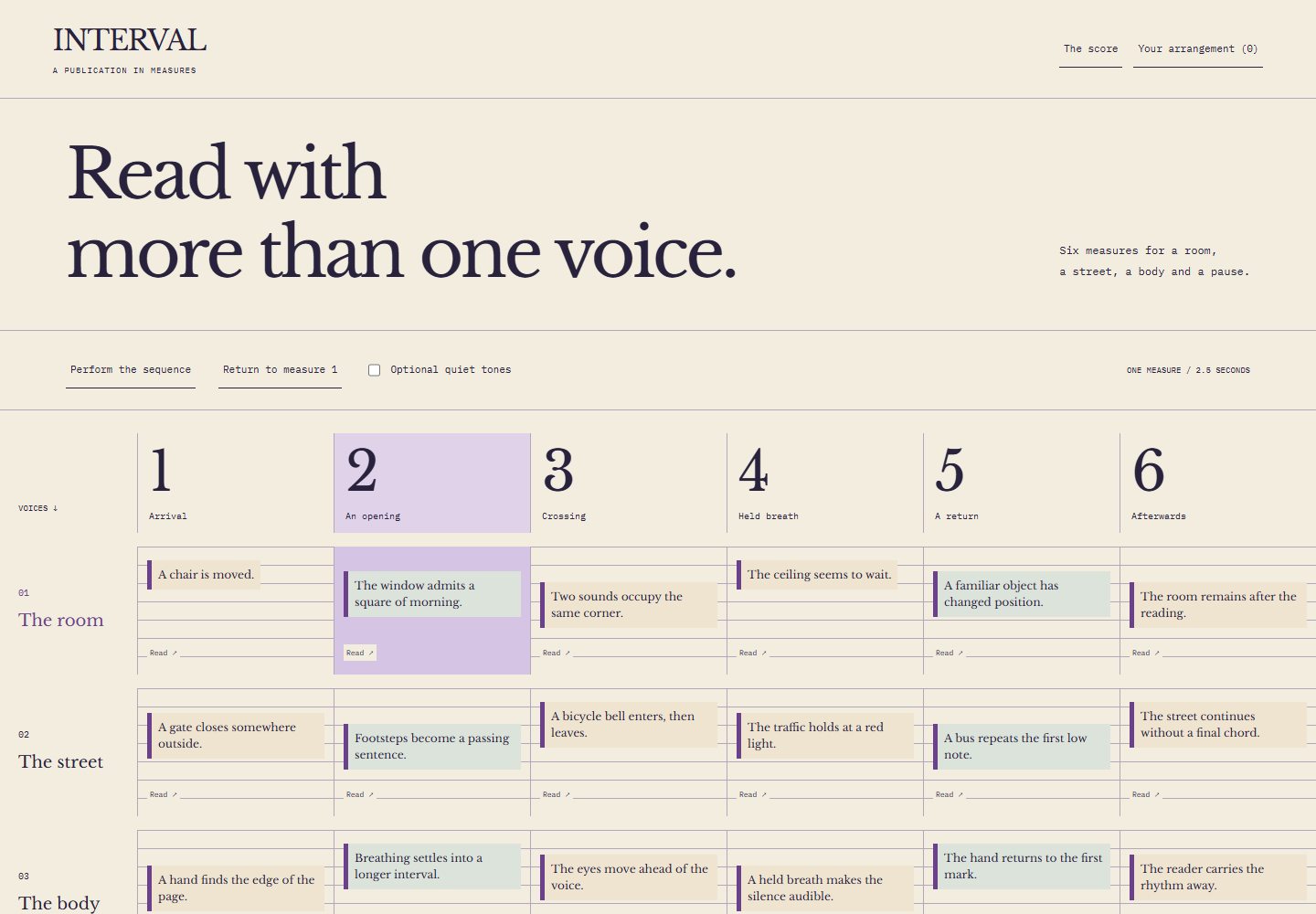
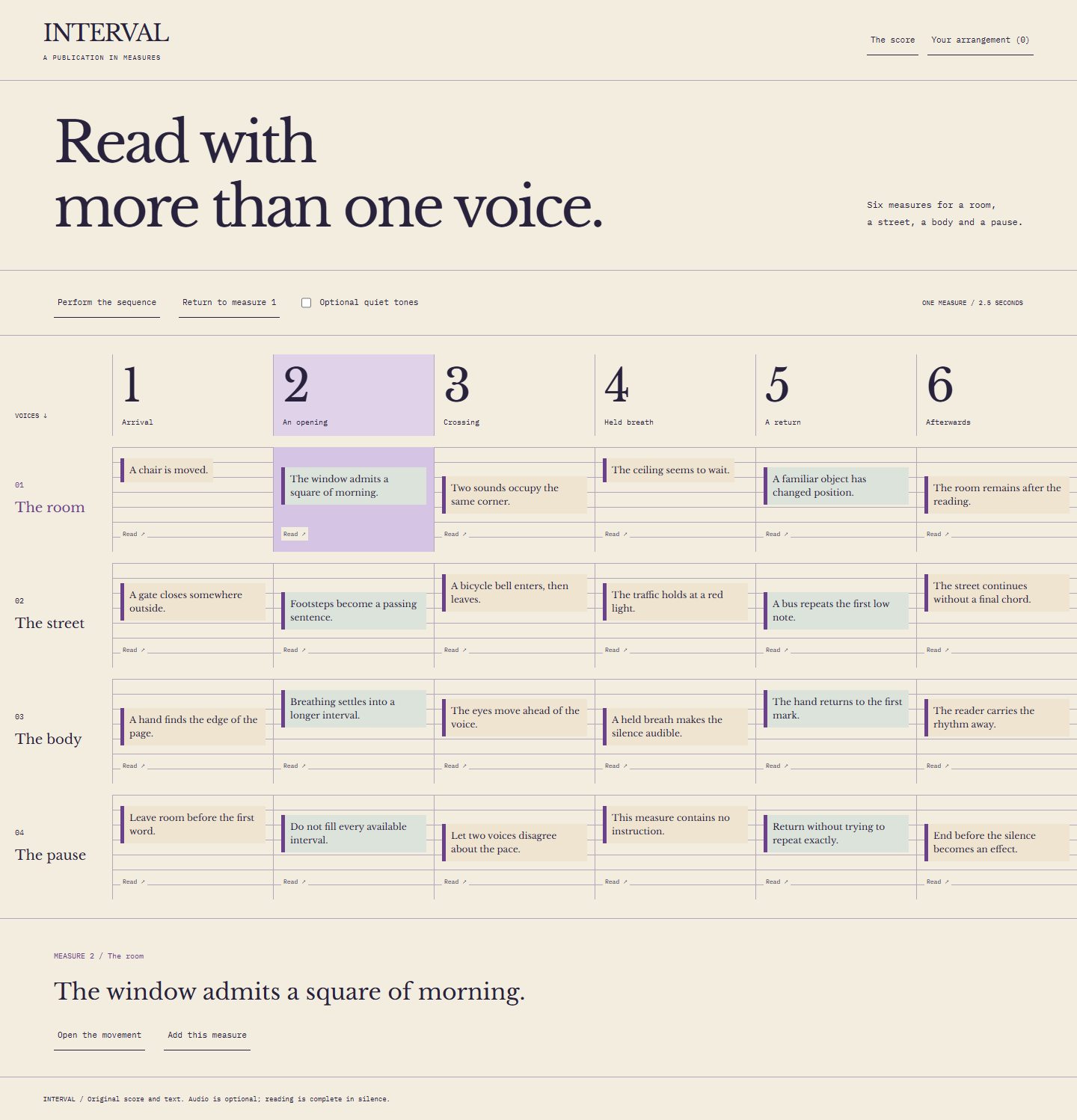
Composition. Oversized measure numbers and four staves span a cream score. Coloured note blocks contain phrases; a playhead and voice controls make the score a working table of contents.
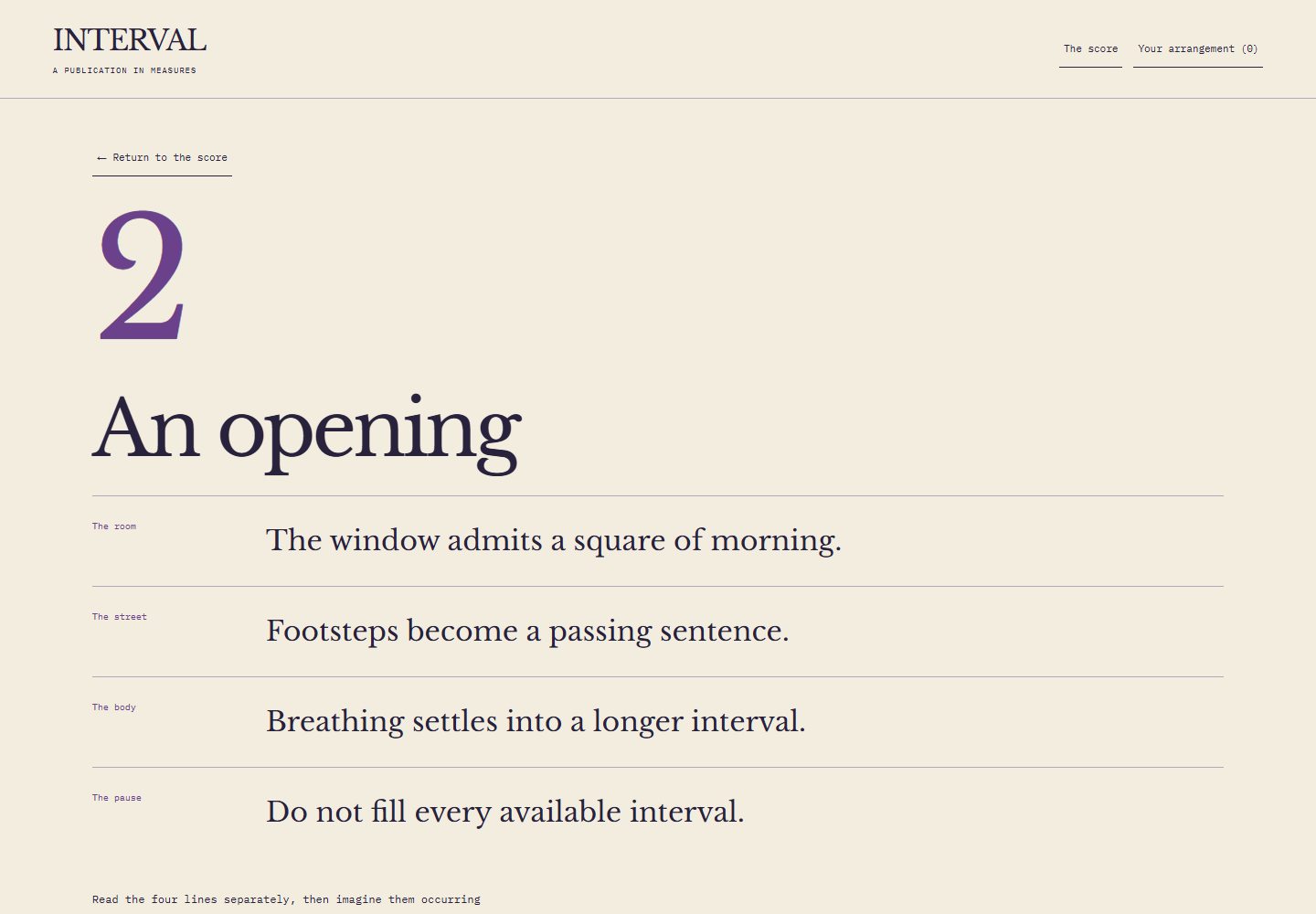
Navigation and complete example. Explore six measures across four authored voices, optionally advance the score at a calm pace, read each movement and arrange a local reading order. Optional tones are triggered only by an explicit sound control.
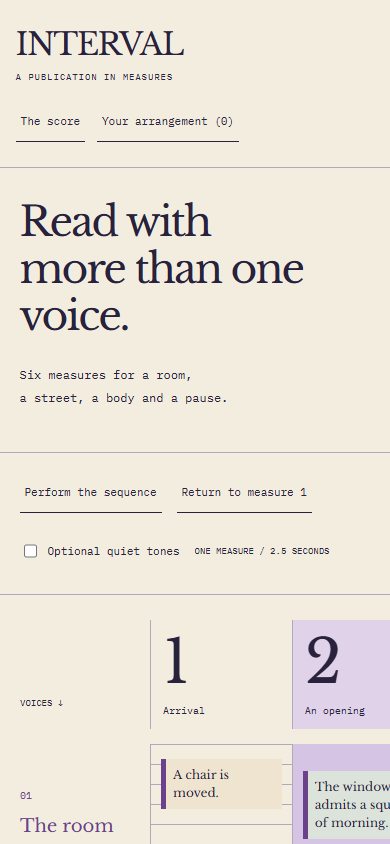
Responsive and inclusive behaviour. The score scrolls within a labelled bounded region, with measure buttons and a full transcript as alternatives. No content requires timed interaction. All controls are native buttons or labelled inputs. Movement is discretionary, no sound starts automatically, reduced-motion preferences remove transitions, and a direct index exposes the same content.
Adaptation. Use timing and polyphony to organise the writing. Keep sound optional, volume modest and every spoken or musical idea available as text. Retain the relationship between navigation and content. Do not reduce the reference to a generic hero followed by interchangeable cards.
Research. [Typatone](https://typatone.com/); [Conditional Design manifesto](https://conditionaldesign.org/manifesto/). These are conceptual precedents, not copied artwork, source code, branding or text. All diagrams and sample writing in this specimen are original, fictional material.
Files for a coding model
Reference images
- Desktop — 1440 × 1000 viewport
- Phone — 390 × 844 viewport
- Supporting state — 1440 × 1000 viewport
- Full page — 1440 × 1000 viewport
Supporting routes
Reuse
Use and adapt the original code and specifications for personal or commercial work under MIT. Keep applicable font and photo notices. The ZIP includes the complete runnable reference and its local assets.