Design reference 72 · Community & institutions
Careers & Recruitment
Show the actual work, the people, and the terms of the job.
Download design ZIP · Open interactive specimen
Design specification
Philosophy and fit. Show the actual work, the people, and the terms of the job. Built for employer, recruitment, careers. The visitor’s next step is to apply for a role.
Visual grammar. Use a energetic coral careers journal with transparent job rows. Preserve the hierarchy of staff stories, salary ranges, requirements, applications; these patterns solve this business’s actual decision, rather than supplying interchangeable decoration.
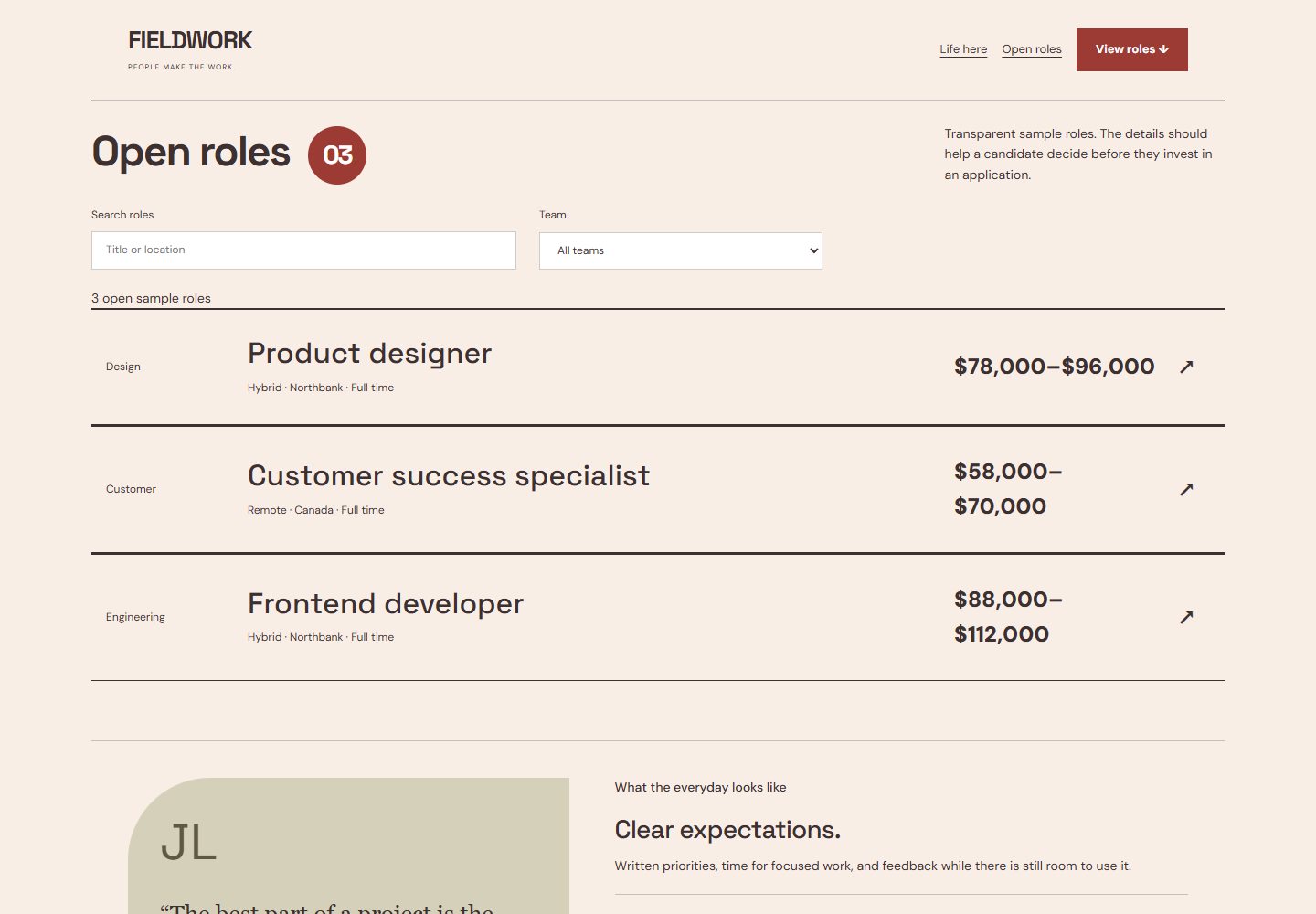
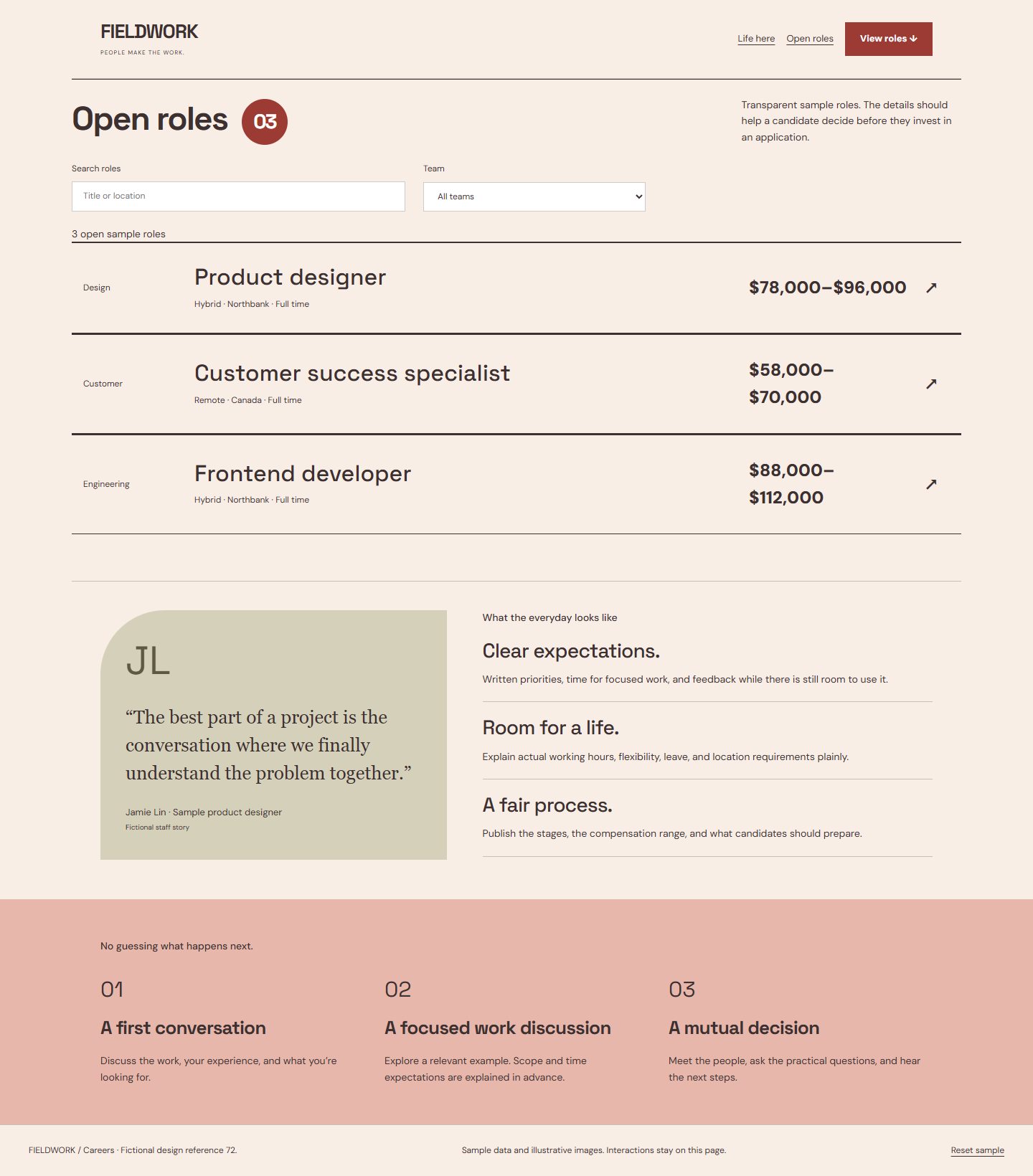
Composition. A vacancy register leads with three complete job rows, team filters, locations and visible salary ranges. A circular vacancy count punctuates the title; staff stories and hiring expectations follow the actual opportunities.
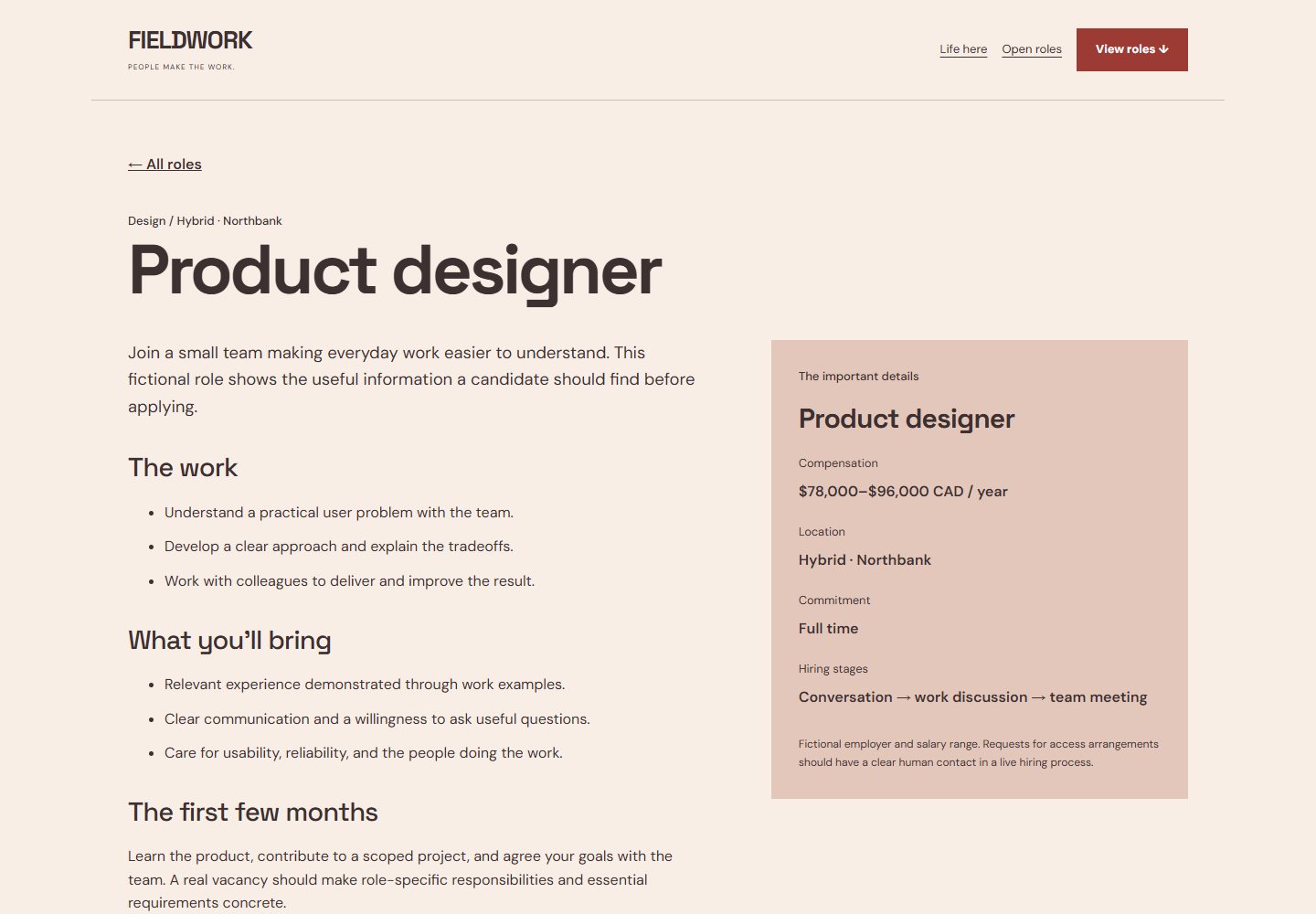
Sample and interaction. FIELDWORK / Careers is a fictional demonstration. The entry page establishes a complete visual direction, with role details and sample application as supporting states. Inputs use local deterministic fixtures; no request, order, application or payment is sent.
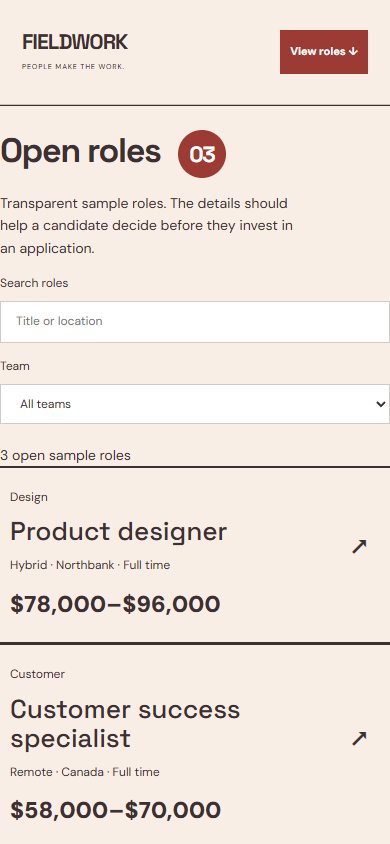
Responsive and inclusive behaviour. Each vacancy becomes a compact labelled stack with salary directly beneath the title and location. Filters precede the first job, and employer stories follow the list. Native buttons, visible focus, a direct return path and reduced-motion support preserve access to the same content.
Adaptation. Replace the fictional brand, prices, availability, qualifications and claims with verified client information. Preserve staff stories, salary ranges, requirements. Use imagery to explain the place, people, work or product, with deliberate crops and honest captions. Do not turn this into a generic hero-and-card layout.
Files for a coding model
Reference images
- Desktop — 1440 × 1000 viewport
- Phone — 390 × 844 viewport
- Supporting state — 1440 × 1000 viewport
- Full page — 1440 × 1000 viewport
Supporting routes
Reuse
Use and adapt the original code and specifications for personal or commercial work under MIT. Keep applicable font and photo notices. The ZIP includes the complete runnable reference and its local assets.