Design reference 50 · Retro & experimental
Infinite Index
Make a finite collection feel explorable at several scales without surrendering orientation.
Download design ZIP · Open interactive specimen
Design specification
Philosophy and fit. Make a finite collection feel explorable at several scales without surrendering orientation. Suitable for visual archives, design references, photography collections, and substantial creative portfolios.
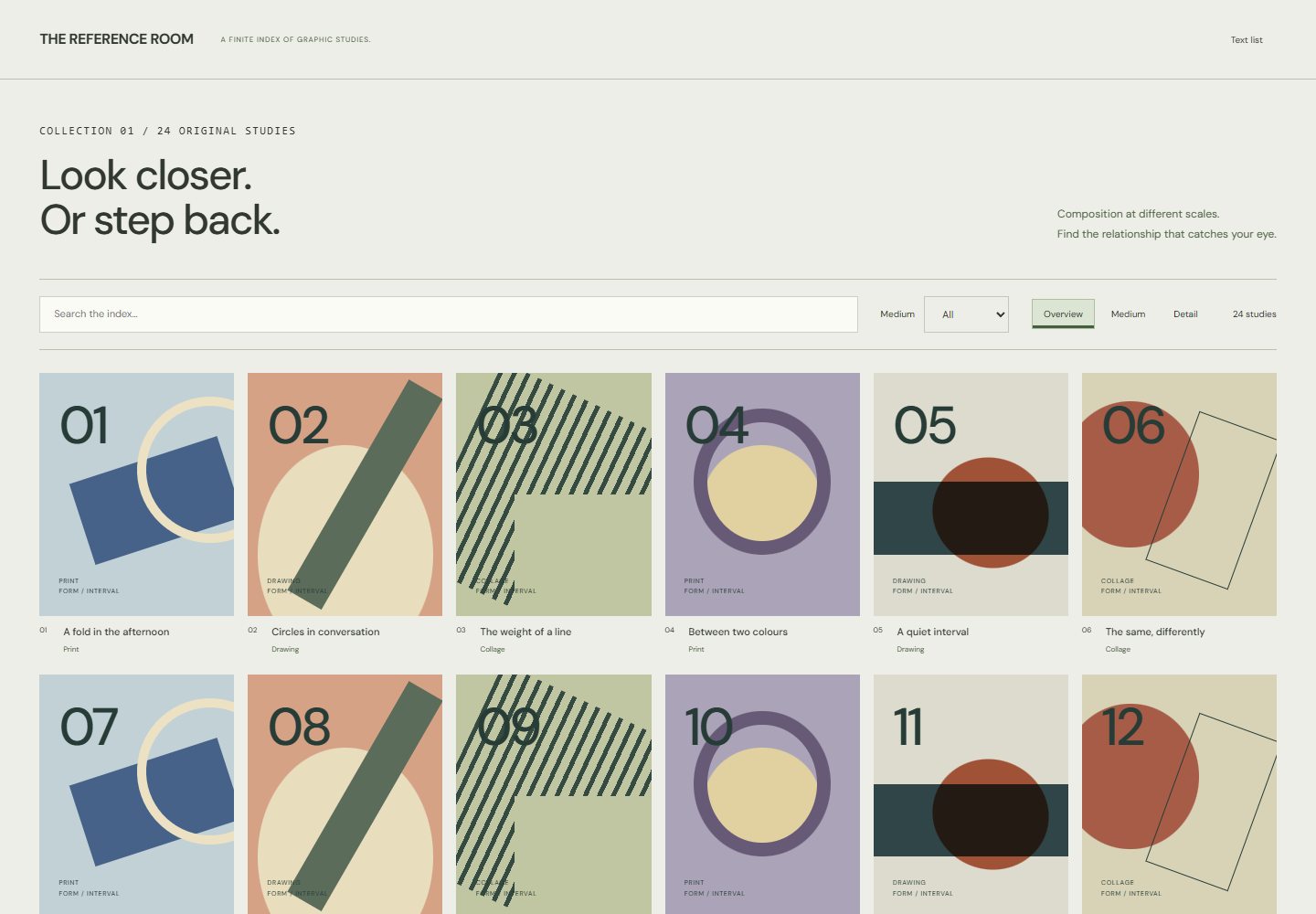
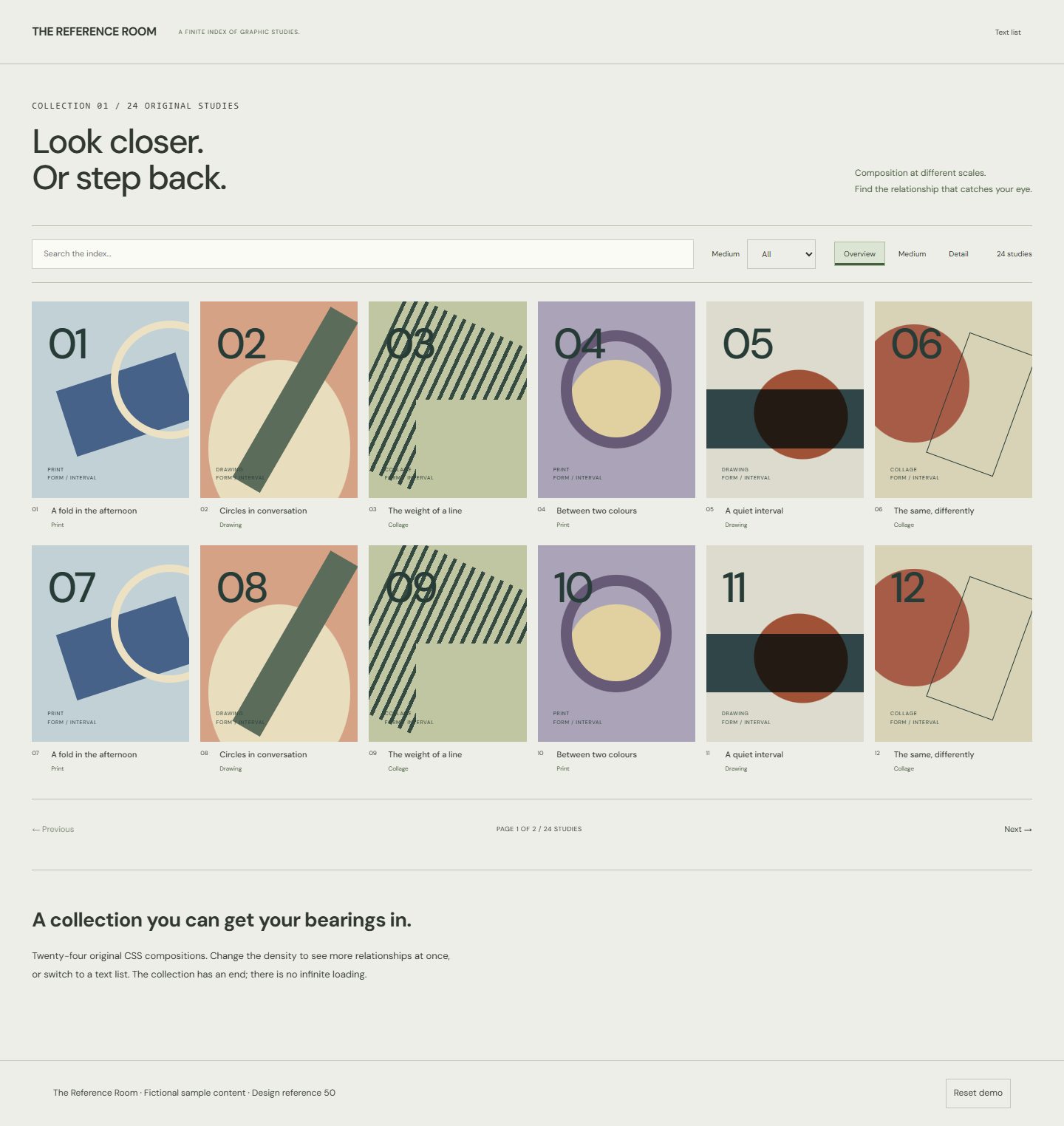
Visual grammar. Use a dense, edge-to-edge index with an anchored search strip, visible result count, clear grouping labels, and selectable overview, medium, and detail densities. Thumbnails and short captions carry the page; typography and chrome recede. Density changes alter how much context is visible, rather than simply enlarging cards inside a conventional landing page.
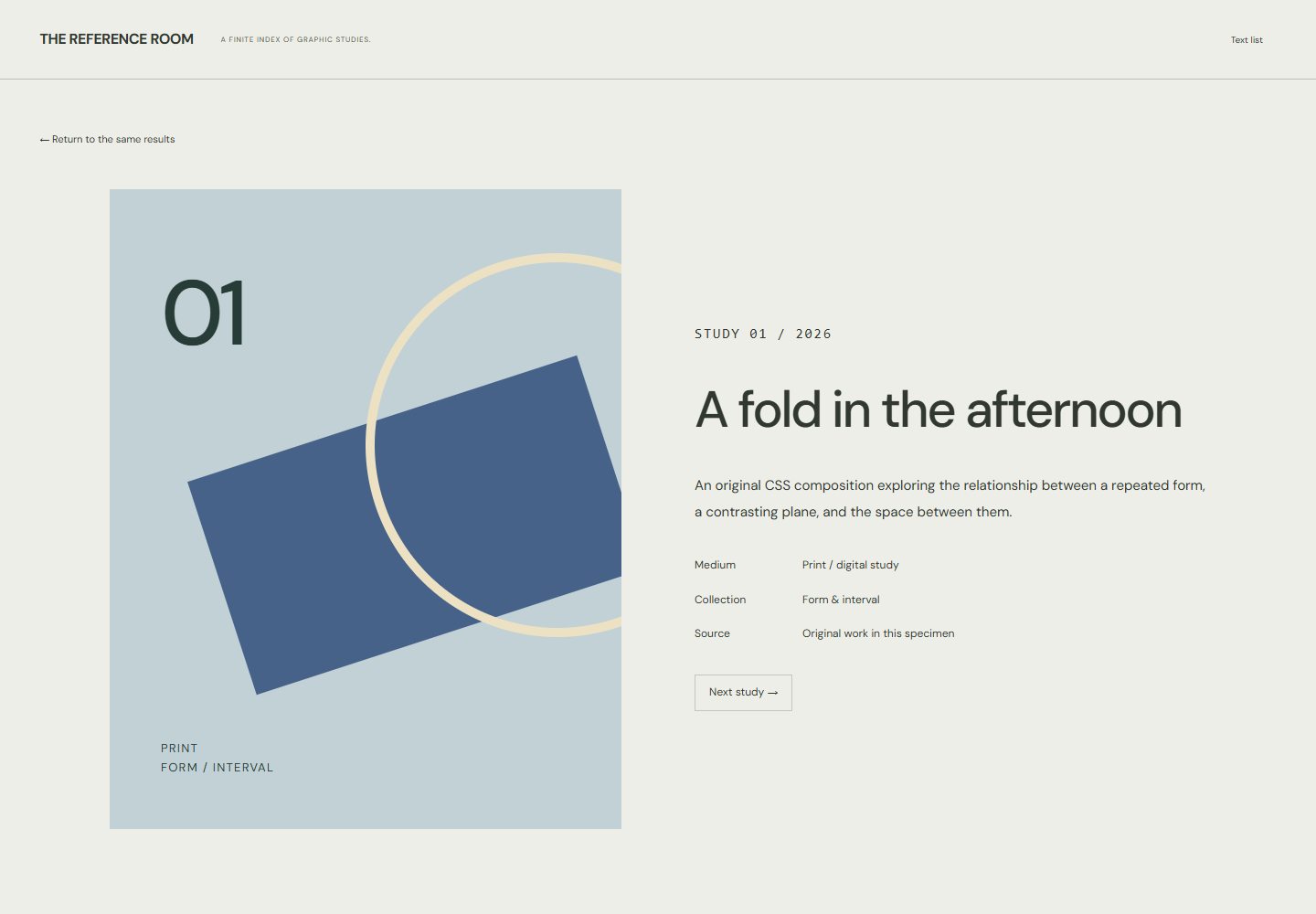
Specimen and flow. *The Reference Room* holds a finite set of fictional graphic studies. Filter by medium, change the overview density, open a specimen, and return to the same position. Supporting views are a text list of results and an explicit empty-result state. Pagination, deep links, and the current page remain visible.
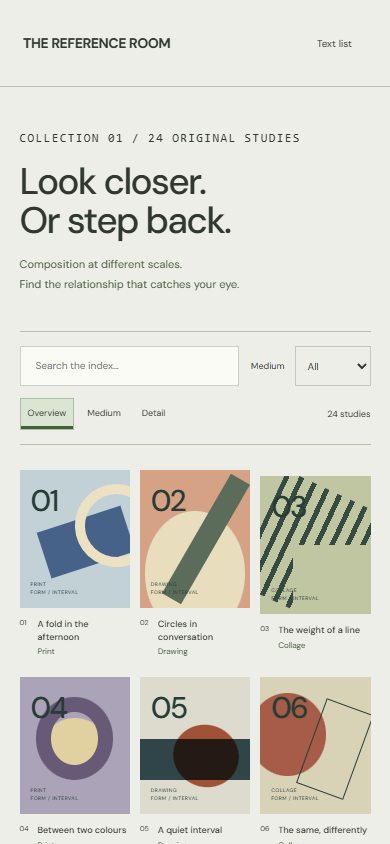
Mobile and motion. Use discrete density controls instead of mandatory pinch or wheel gestures. Keep captions legible and preserve focus when returning from details. Reduced motion switches views immediately.
Identity and effort. Preserve overview-to-detail exploration; avoid an endless feed, hidden destinations, or costly unbounded rendering. Effort: medium.
Files for a coding model
Reference images
- Desktop — 1440 × 1000 viewport
- Phone — 390 × 844 viewport
- Supporting state — 1440 × 1000 viewport
- Full page — 1440 × 1000 viewport
Supporting routes
Reuse
Use and adapt the original code and specifications for personal or commercial work under MIT. Keep applicable font and photo notices. The ZIP includes the complete runnable reference and its local assets.