Design reference 48 · Retro & experimental
Spatial Gallery
Let spatial arrangement communicate relationships between a deliberately small collection of objects.
Download design ZIP · Open interactive specimen
Design specification
Philosophy and fit. Let spatial arrangement communicate relationships between a deliberately small collection of objects. Suitable for digital exhibitions, architecture showcases, art collections, and immersive portfolios.
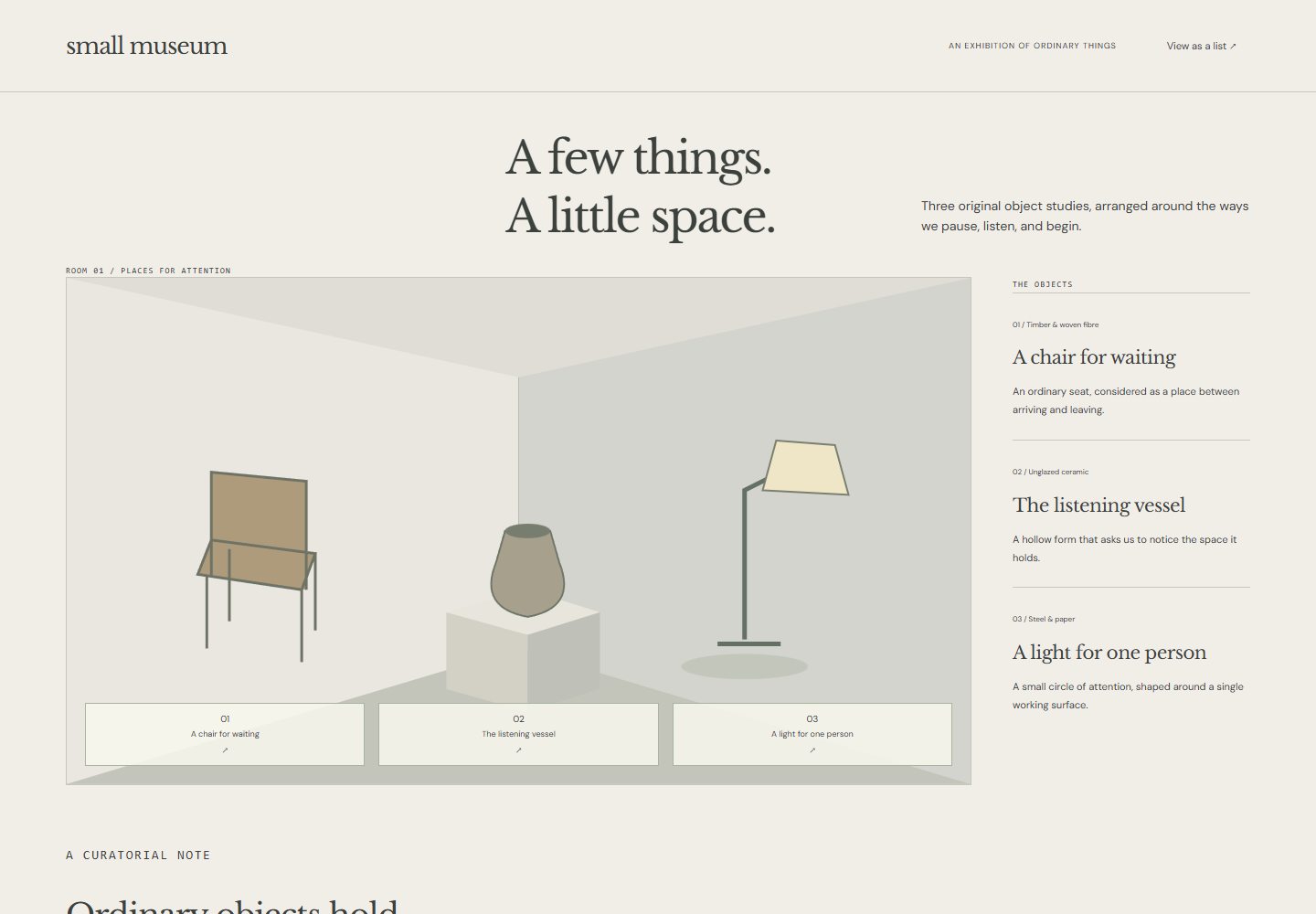
Visual grammar. Present a shallow spatial stage in CSS or SVG, with clearly labelled exhibits and a permanent destination list. A three-dimensional renderer is optional only if it adds necessary spatial meaning. Use quiet architectural surfaces, neutral framing, restrained type, and object-specific imagery. Distance and grouping convey curatorial relationships. A standard detail panel holds all substantive text.
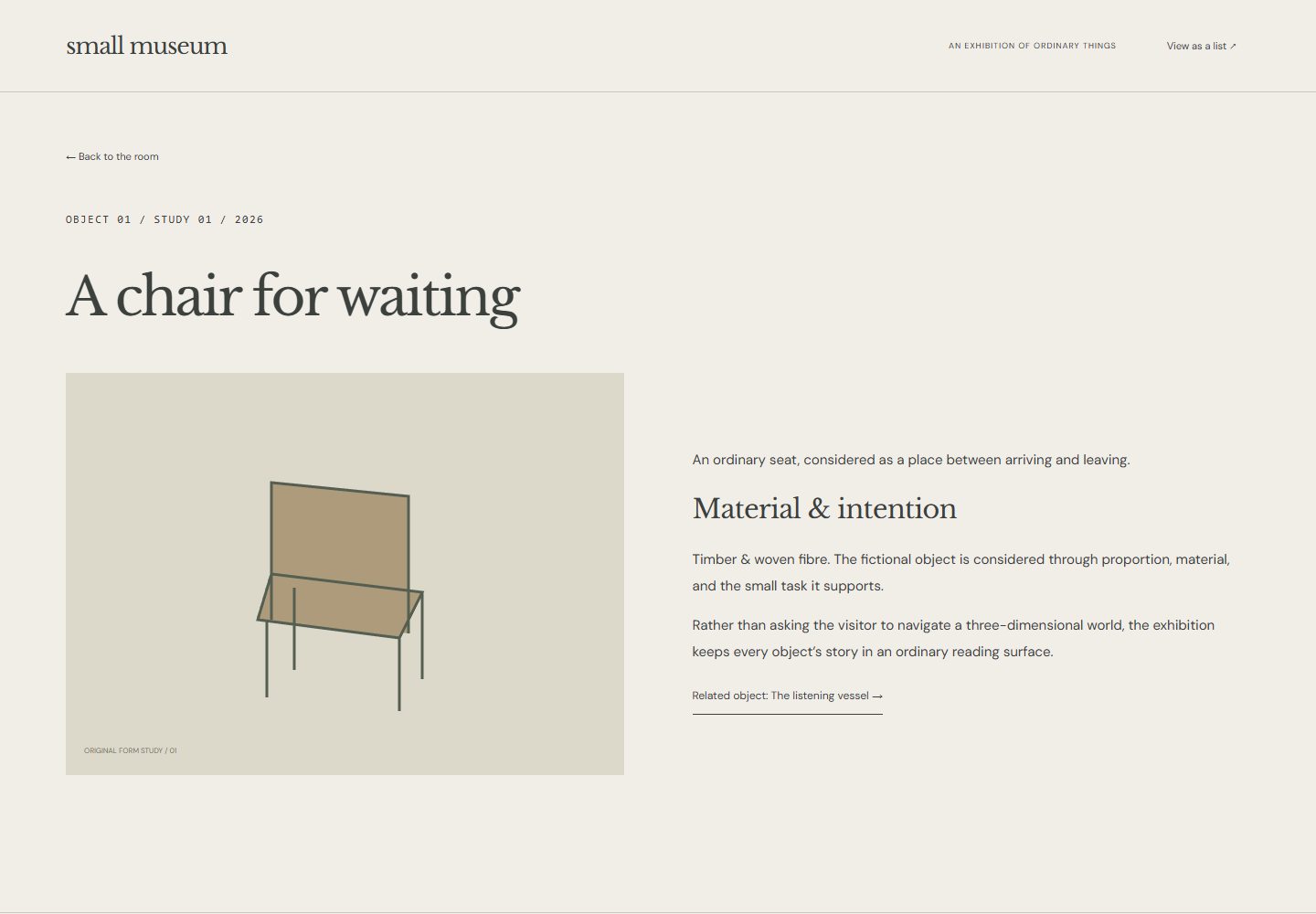
Specimen and flow. *Small Museum* exhibits fictional design objects. Choose an exhibit from the scene or its equivalent list, inspect its description, and move to a related object. Supporting views are the complete collection list and an object detail page with a stable URL.
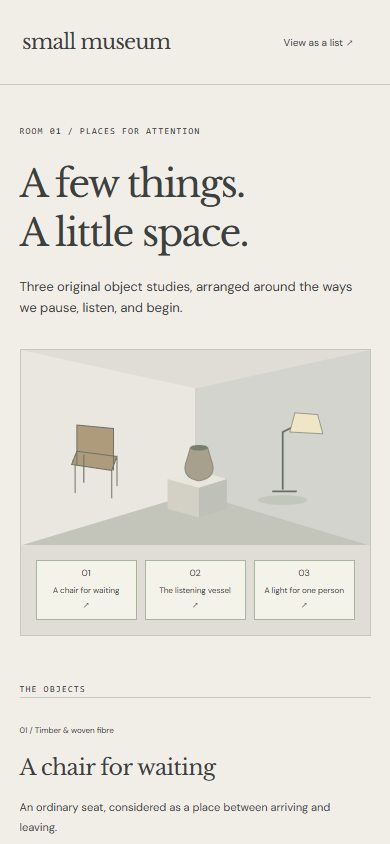
Mobile and motion. Default to a two-dimensional arrangement or the list on constrained devices. Reduced motion removes camera travel. Keyboard users can visit every exhibit without steering through space; failed rendering leaves the list available.
Identity and effort. Preserve meaningful spatial grouping; avoid mandatory free movement, heavy introductory sequences, or essential text embedded in a canvas. Effort: high.
Files for a coding model
Reference images
- Desktop — 1440 × 1000 viewport
- Phone — 390 × 844 viewport
- Supporting state — 1440 × 1000 viewport
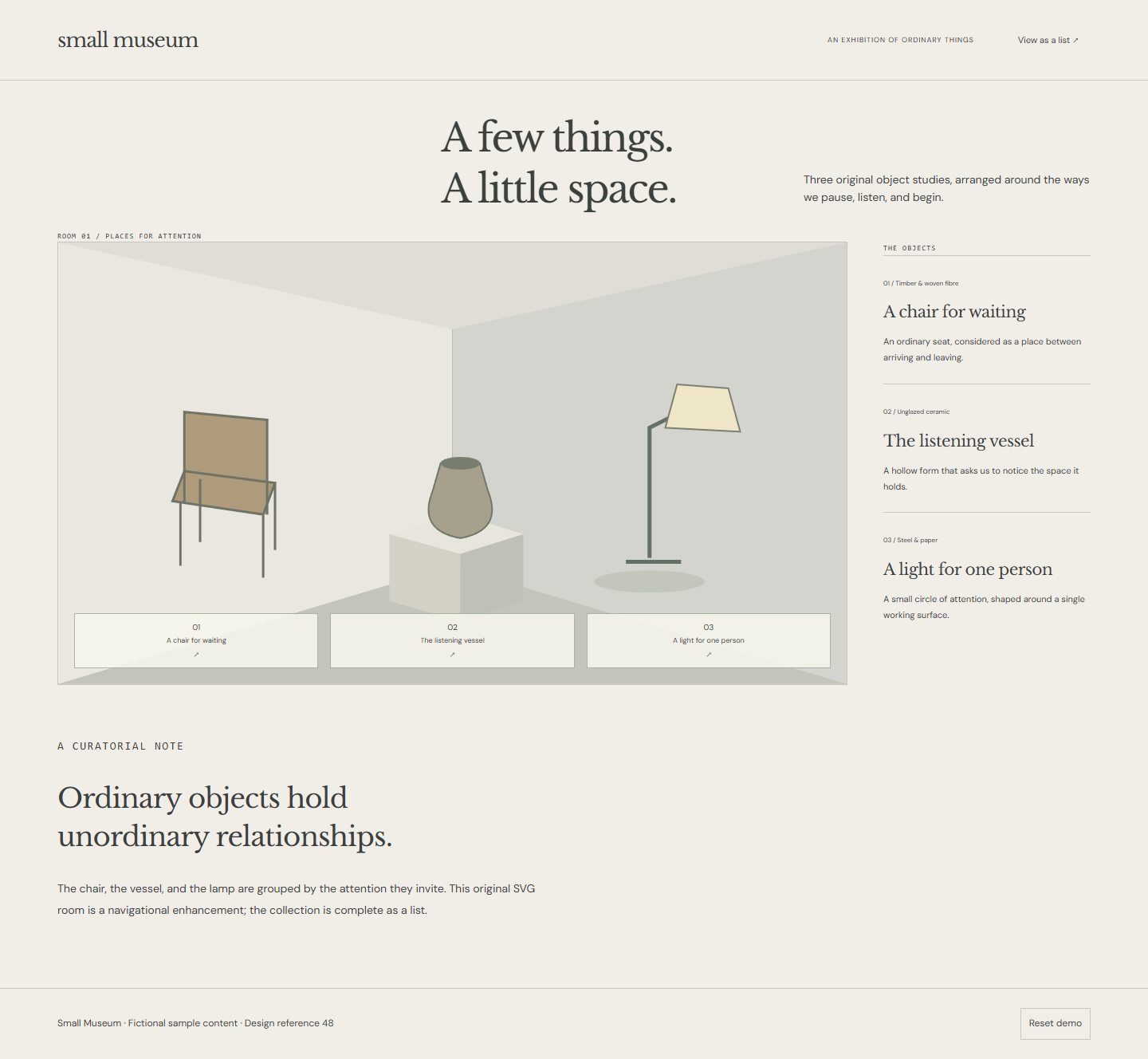
- Full page — 1440 × 1000 viewport
Supporting routes
Reuse
Use and adapt the original code and specifications for personal or commercial work under MIT. Keep applicable font and photo notices. The ZIP includes the complete runnable reference and its local assets.