Design reference 42 · Retro & experimental
Teletext Bulletin
Deliver compact, regularly structured information through explicit sections and numbered pages.
Download design ZIP · Open interactive specimen
Design specification
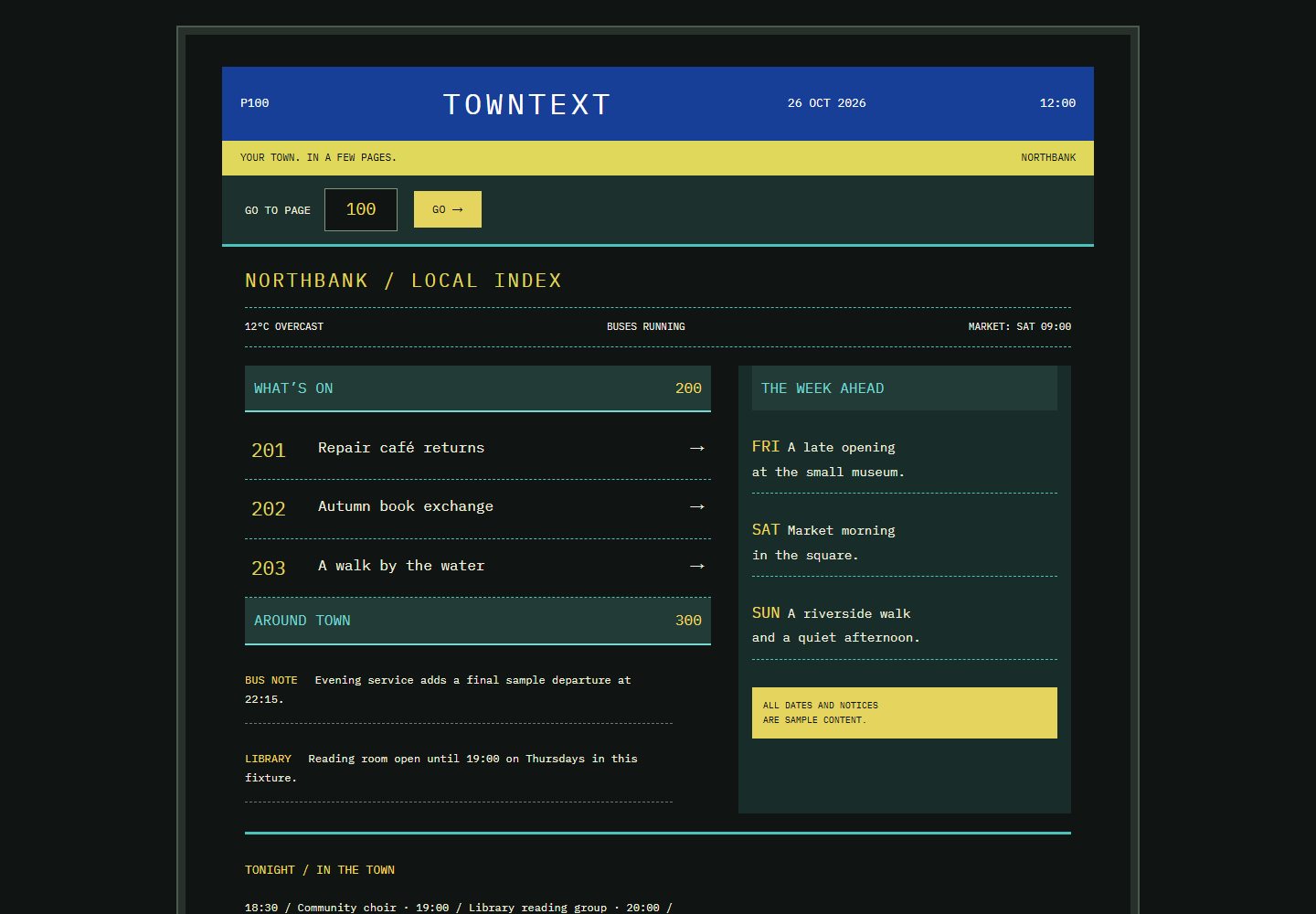
Philosophy and fit. Deliver compact, regularly structured information through explicit sections and numbered pages. Suitable for event bulletins, community updates, sports summaries, and small informational directories.
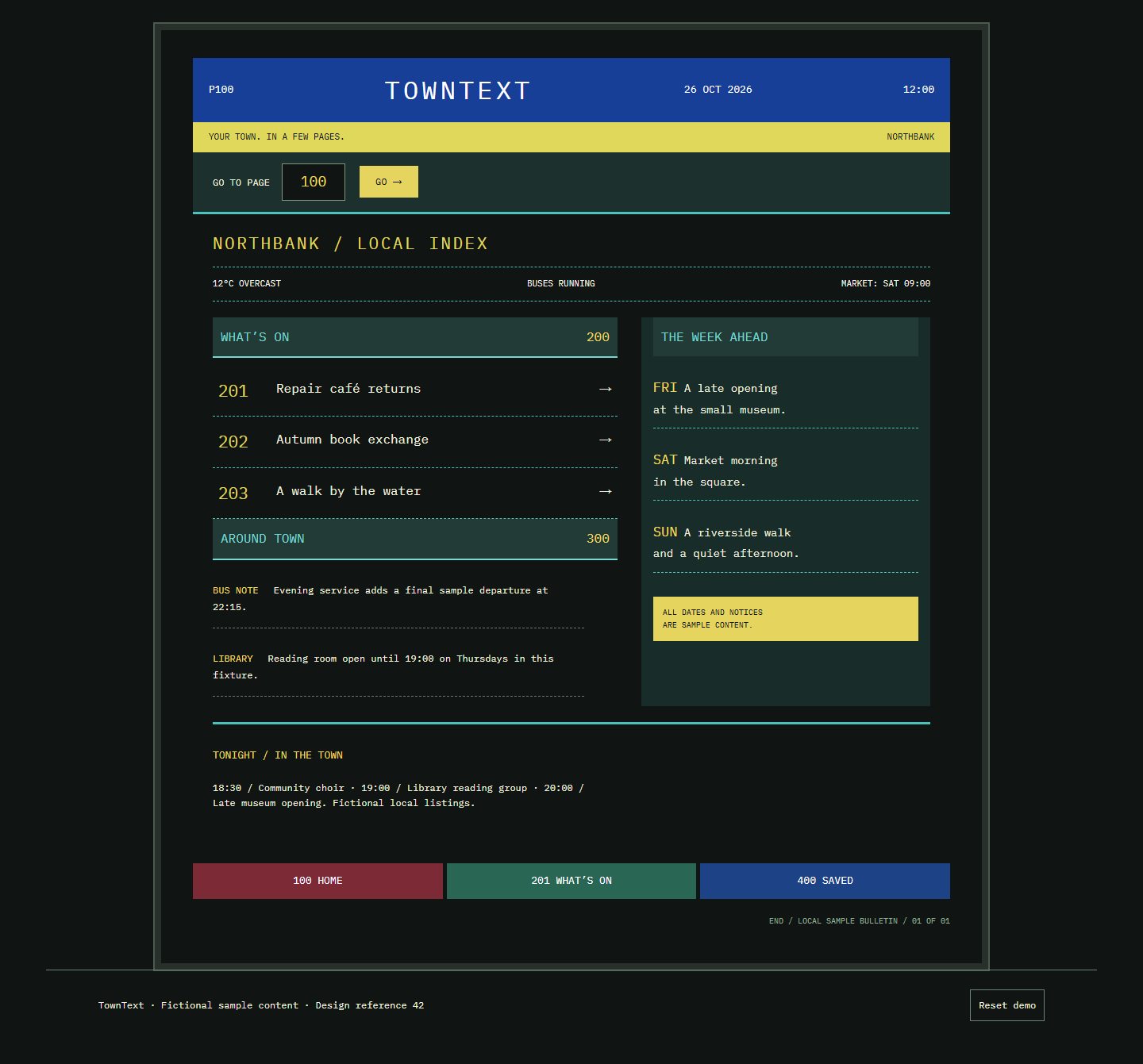
Visual grammar. Use a broadcast-style title strip, visible page identifier, tightly organised text rows, block colour bands, and a footer of section links. Monospaced display text and rectangular graphics create the character. Keep a deliberately limited palette, while choosing text and background combinations that remain readable. Unlike a terminal, the page resembles an edited bulletin, without prompts or command history.
Composition. An edited broadcast index begins with page entry, town conditions, numbered event rows and a week-ahead column. Dense monospace information, strong coloured bands and page codes establish teletext; a large greeting no longer delays the bulletin.
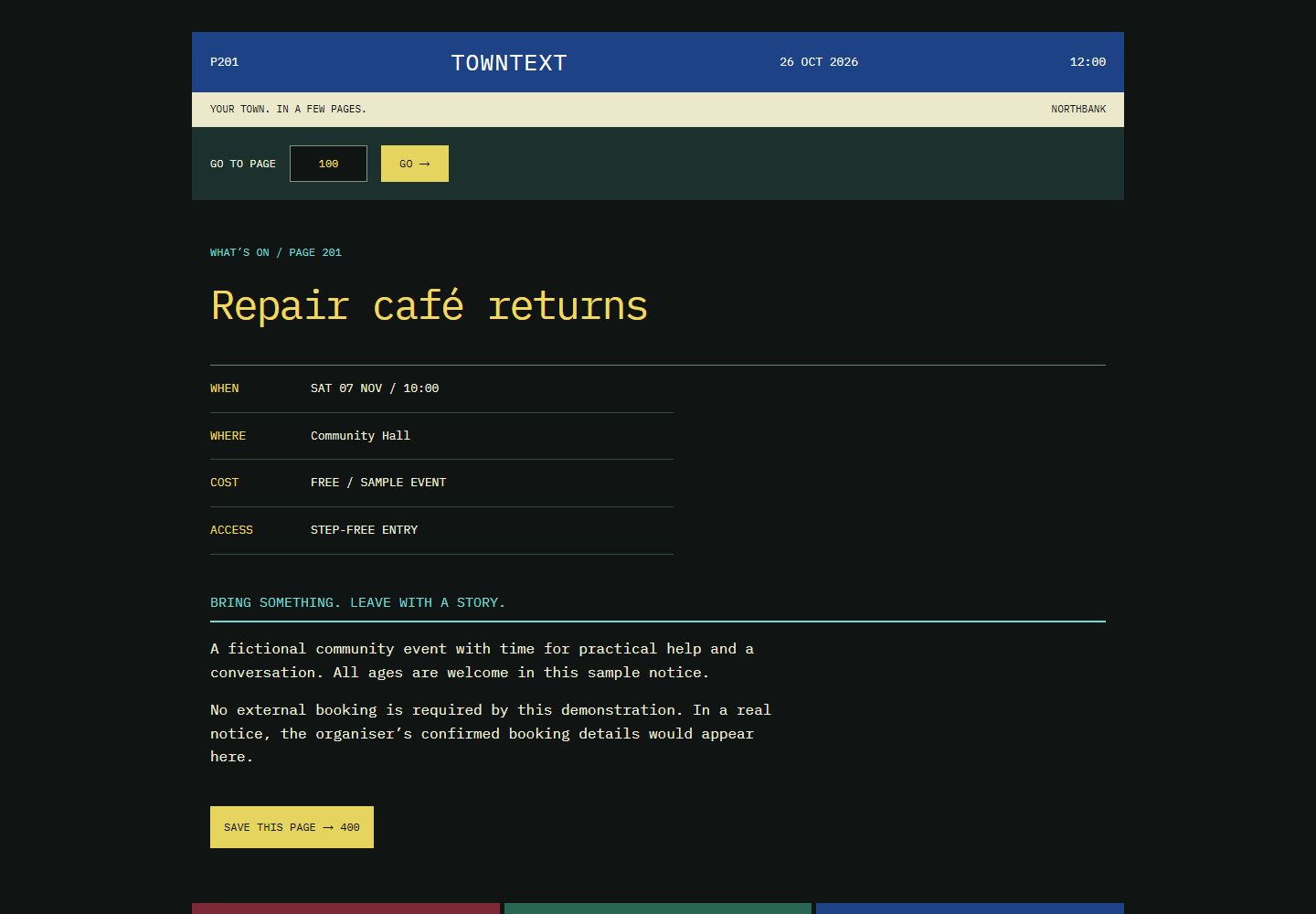
Specimen and flow. _TownText_ is a fictional community notice service. Choose What’s On, open a numbered event page, and follow its booking information. Supporting views are the subject index and a saved-pages list stored locally. Dates are labelled sample content.
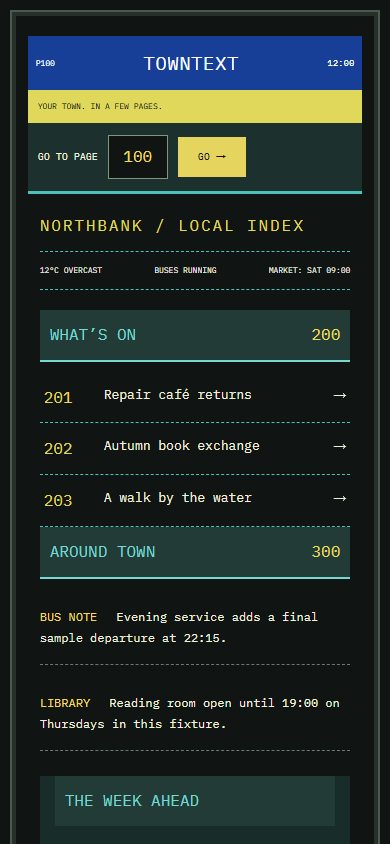
Responsive and inclusive behaviour. The page number and first three event rows fit near the top of the phone view. Secondary weekly notices follow in the same broadcast vocabulary. Native buttons, visible focus, a direct return path and reduced-motion support preserve access to the same content.
Identity and effort. Preserve editorial compression and numbered navigation; avoid mandatory memorised codes, flashing text, and pixel-game decoration. Effort: low.
Files for a coding model
Reference images
- Desktop — 1440 × 1000 viewport
- Phone — 390 × 844 viewport
- Supporting state — 1440 × 1000 viewport
- Full page — 1440 × 1000 viewport
Supporting routes
Reuse
Use and adapt the original code and specifications for personal or commercial work under MIT. Keep applicable font and photo notices. The ZIP includes the complete runnable reference and its local assets.