Design reference 35 · Playful & material
Paper Cabinet
Make a collection feel organised, discoverable, and worth returning to.
Download design ZIP · Open interactive specimen
Design specification
Philosophy and fit. Make a collection feel organised, discoverable, and worth returning to. Appropriate for archives, recipe libraries, reading collections, and curated research materials.
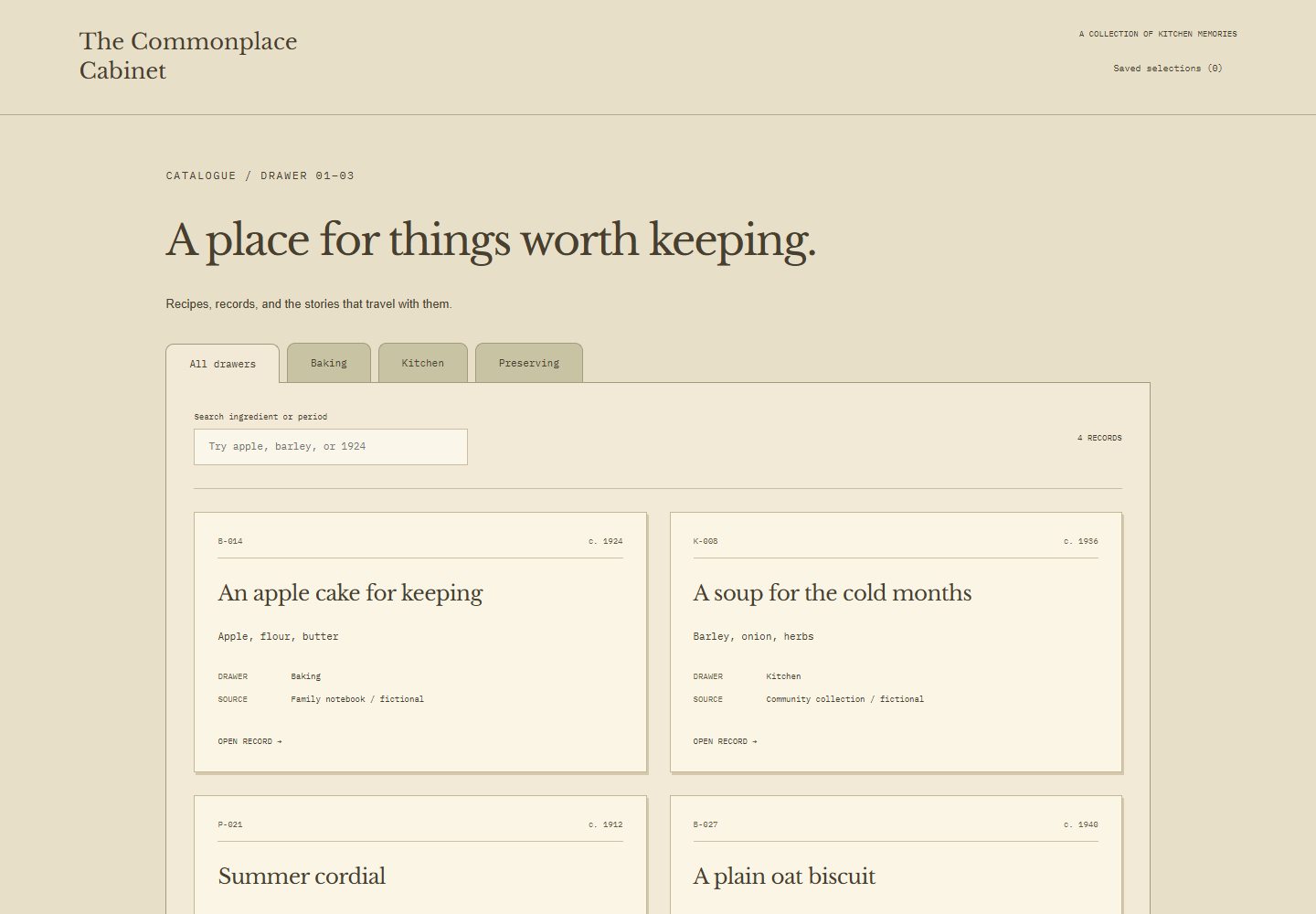
Visual grammar. Tabbed drawers introduce categories; index cards present consistent metadata; a detail sheet holds the full record. Use buff paper, dark brown text, muted olive tabs, fine rules, and a modest serif paired with monospaced accession labels. Physical cues clarify organisation without requiring a simulated filing cabinet.
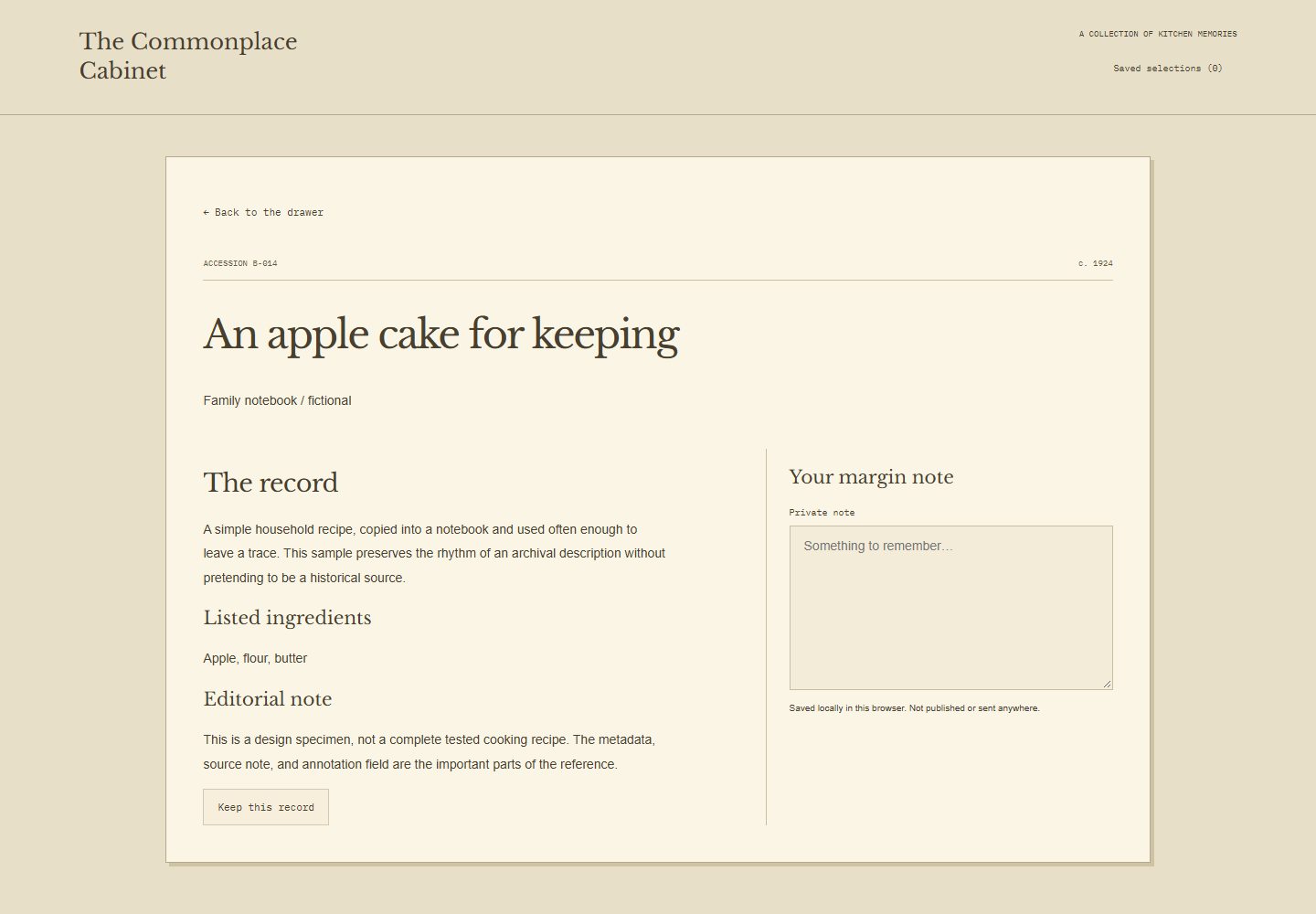
Specimen and flow. *The Commonplace Cabinet* collects fictional historical recipes. Choose a drawer, filter cards by ingredient or period, and open a recipe record. Supporting views include saved selections and a record with missing provenance clearly marked. Users can add a private note stored locally and return to the same filtered list.
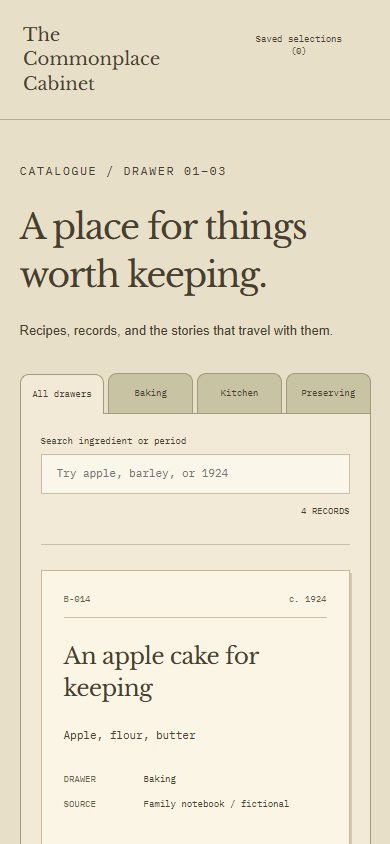
Responsive behaviour. Drawer tabs become a labelled category selector. Cards stack in a single readable column; record sheets open as ordinary pages rather than floating paper windows.
Identity rules. Preserve stable metadata, tactile hierarchy, and the index-to-record relationship. Avoid ornamental desk clutter, unreadable ageing effects, or hiding navigation inside decorative objects. Effort: medium.
Files for a coding model
Reference images
- Desktop — 1440 × 1000 viewport
- Phone — 390 × 844 viewport
- Supporting state — 1440 × 1000 viewport
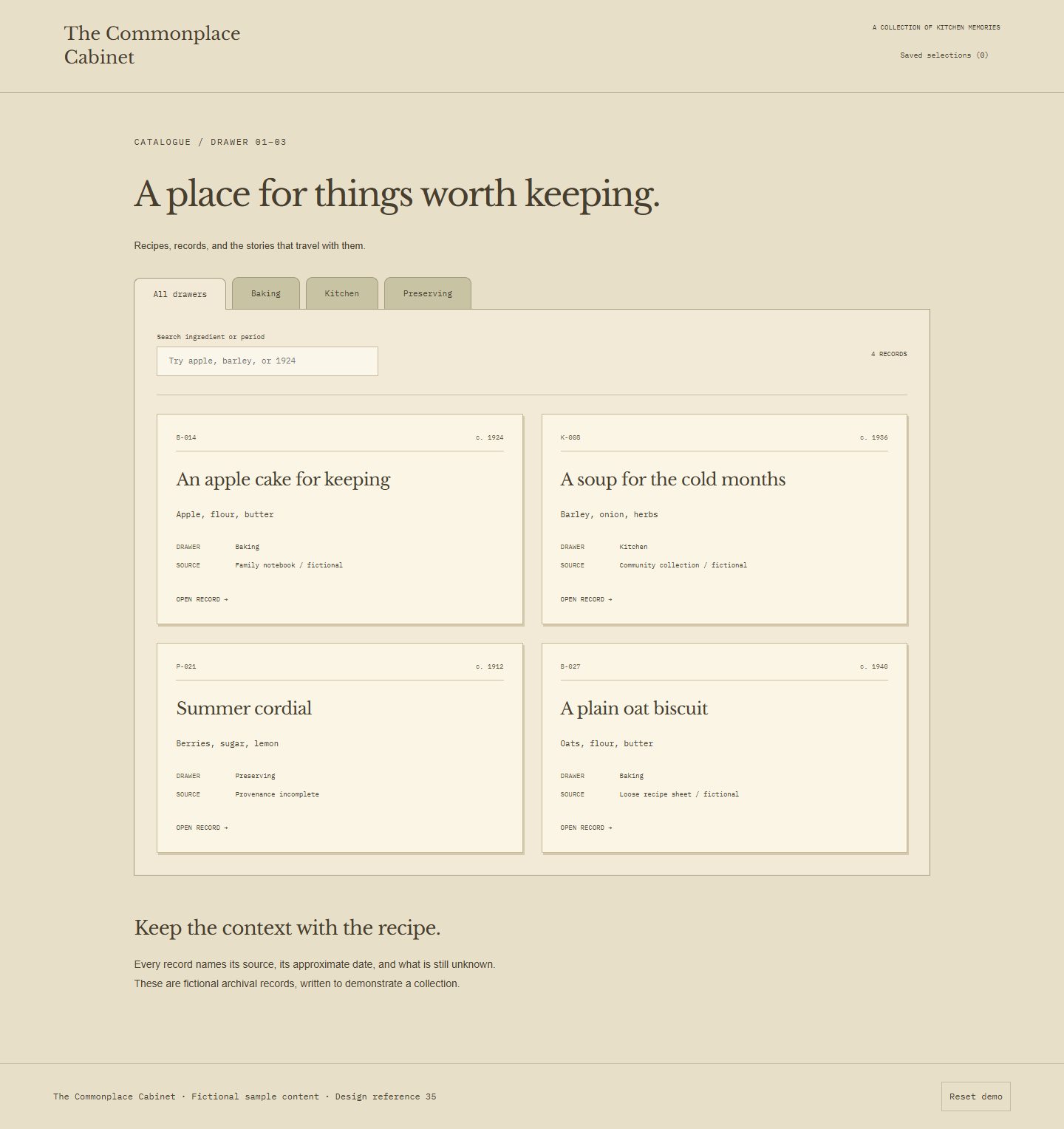
- Full page — 1440 × 1000 viewport
Supporting routes
Reuse
Use and adapt the original code and specifications for personal or commercial work under MIT. Keep applicable font and photo notices. The ZIP includes the complete runnable reference and its local assets.