Design reference 24 · Commerce & places
Fine Dining
Build anticipation through pacing, seasonality, and precise hospitality.
Download design ZIP · Open interactive specimen
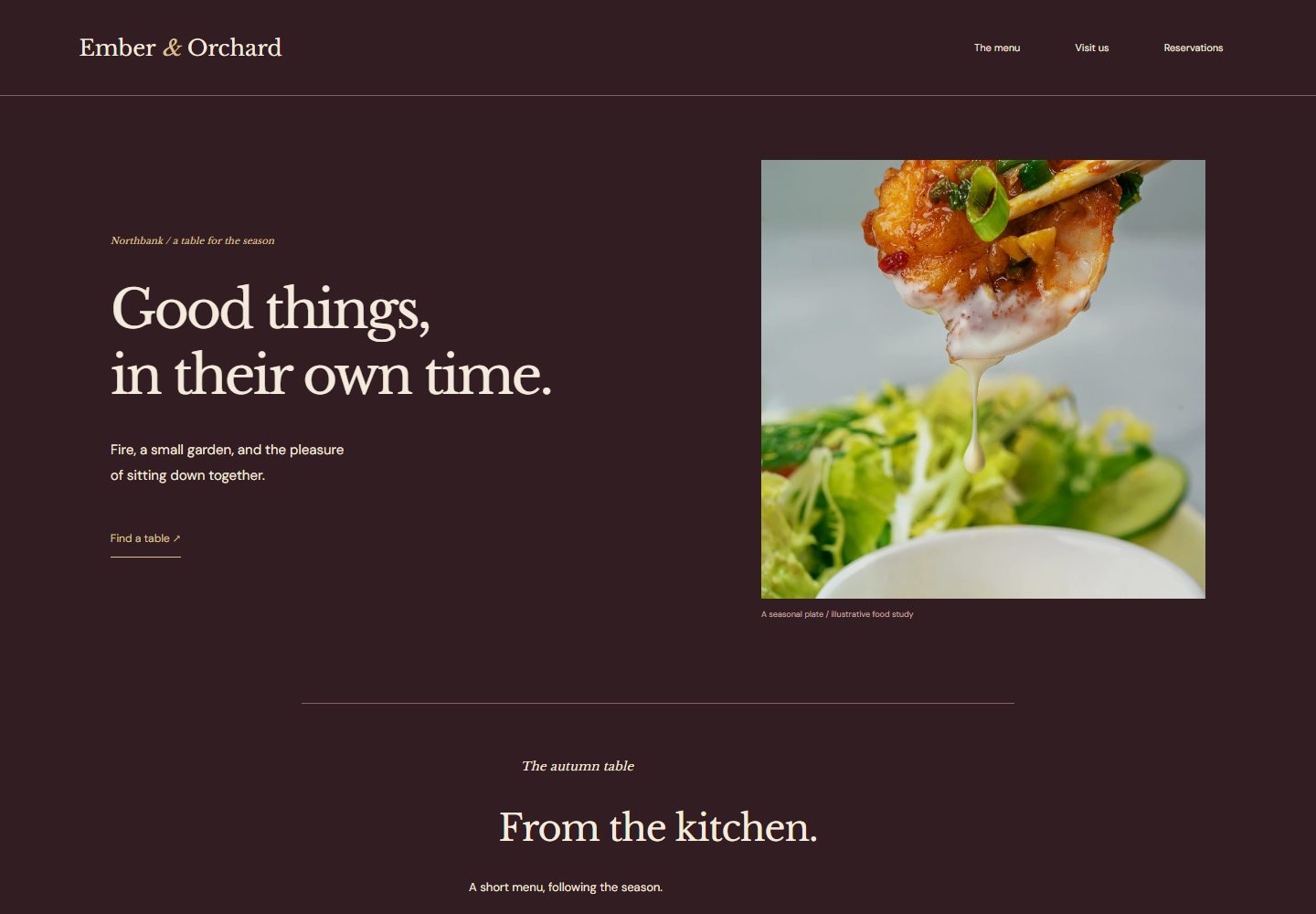
Design specification
Philosophy and fit. Build anticipation through pacing, seasonality, and precise hospitality. Suitable for restaurants, tasting experiences, wine bars, and small culinary venues.
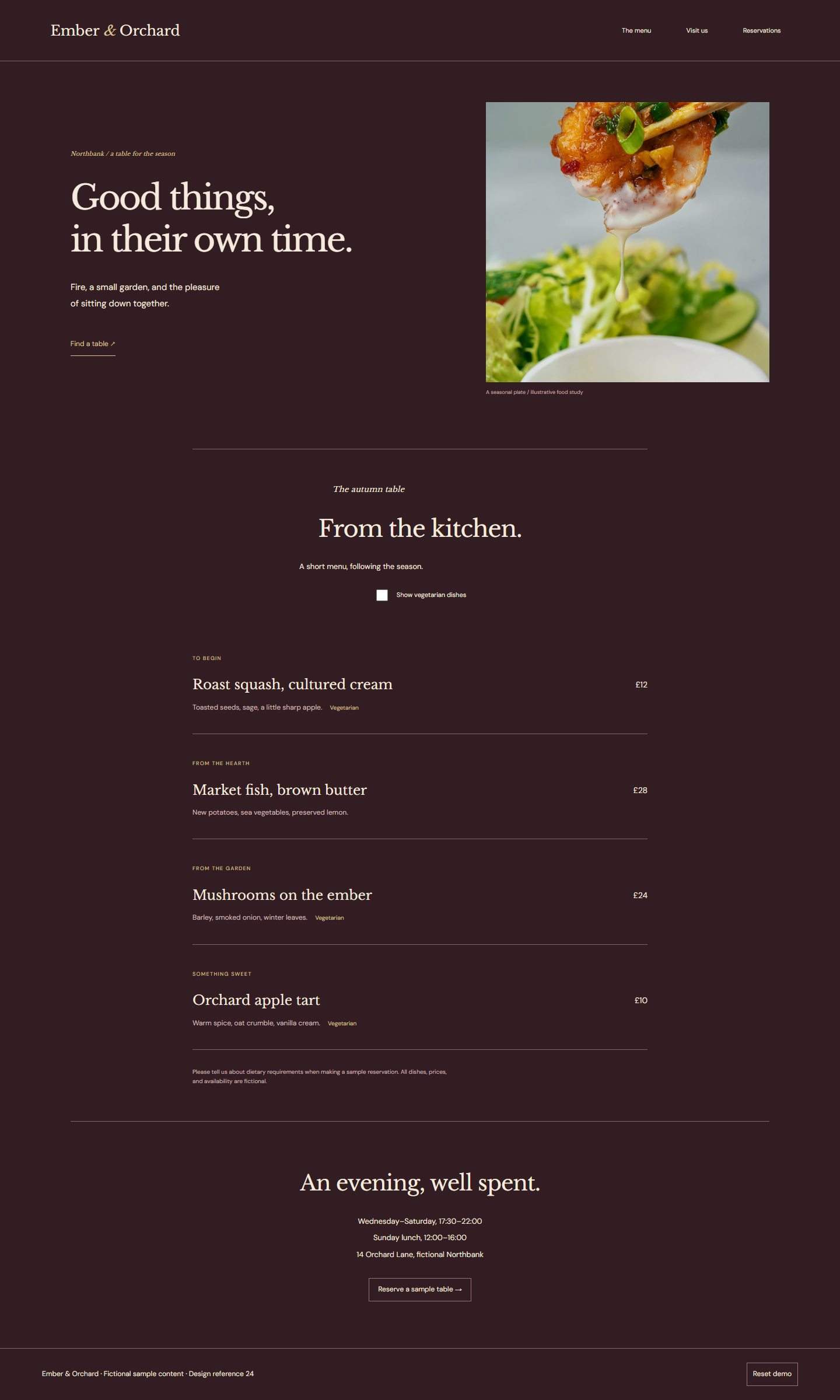
Visual grammar. The menu provides the main compositional rhythm: course titles, descriptions, and prices arranged as a carefully typeset sequence. A narrow navigation offers menu, visit, and reservations. Deep oxblood, ivory, and muted brass support editorial food photography, a characterful serif, and generous vertical intervals. Rules and small botanical details replace repeated boxes.
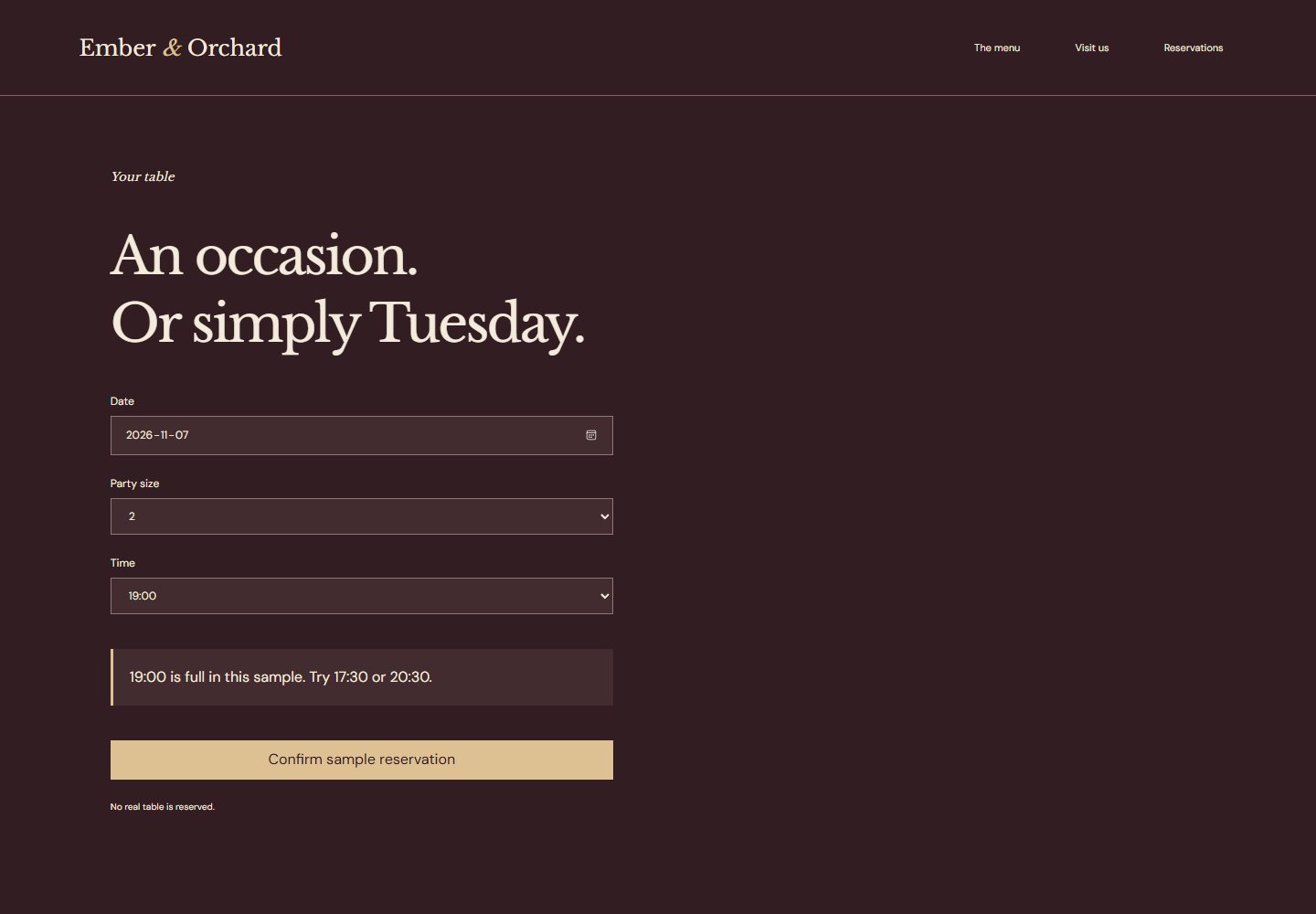
Specimen and flow. *Ember & Orchard* presents a seasonal restaurant. Read the current menu, inspect dietary information, and choose a date and party size in a local reservation demonstration. Supporting views include private dining and a clear unavailable-time state with nearby alternatives. The final confirmation is visibly a sample reservation.
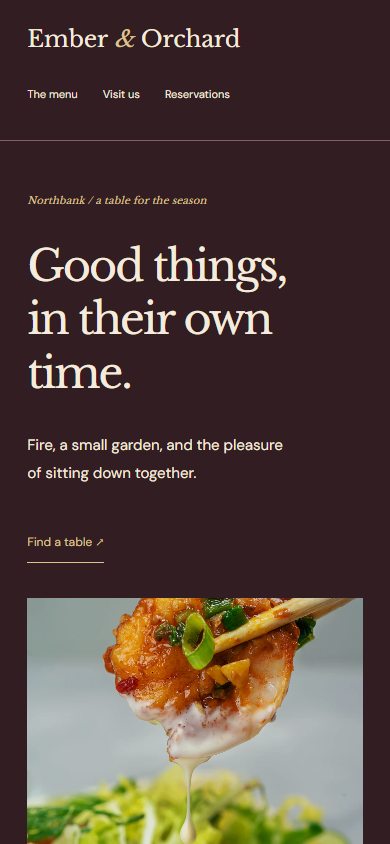
Responsive behaviour. Menu descriptions and prices remain aligned without shrinking text. The reservation form becomes a simple vertical sequence; photography does not obstruct it.
Identity rules. Preserve the menu’s reading rhythm and practical visit information. Avoid autoplay ambience, illegible gold text, and hiding prices behind photographs. Effort: medium.
Distinctive composition. Serif menu captions and a slower typographic cadence support fine dining, distinct from the new Everyday Eatery’s menu board.
Files for a coding model
Reference images
- Desktop — 1440 × 1000 viewport
- Phone — 390 × 844 viewport
- Supporting state — 1440 × 1000 viewport
- Full page — 1440 × 1000 viewport
Supporting routes
Reuse
Use and adapt the original code and specifications for personal or commercial work under MIT. Keep applicable font and photo notices. The ZIP includes the complete runnable reference and its local assets.