Design reference 13 · Workspaces & discovery
Project Workbench
Keep a project's structure, current object, and relevant properties available together.
Download design ZIP · Open interactive specimen
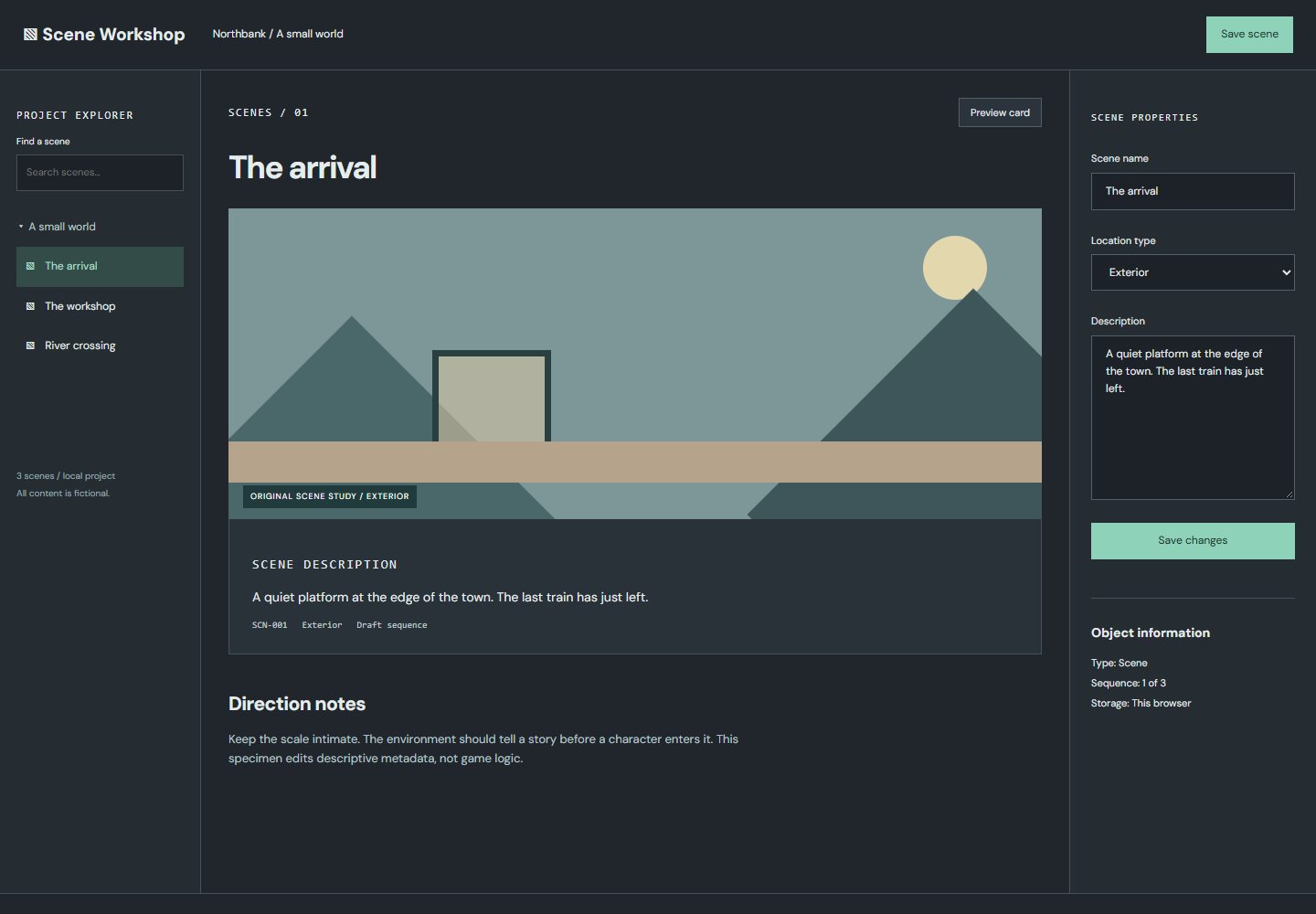
Design specification
Philosophy and fit. Keep a project's structure, current object, and relevant properties available together. Suitable for content editors, asset managers, authoring tools, and technical project interfaces.
Visual grammar. Use a three-pane composition: a hierarchical navigator, a central document or object view, and a contextual inspector. A restrained app header holds global actions. Neutral sans text, monospace identifiers, graphite surfaces, bright readable text, and a single teal selection accent establish a workmanlike environment. Pane boundaries and selected states should be clear without elaborate chrome.
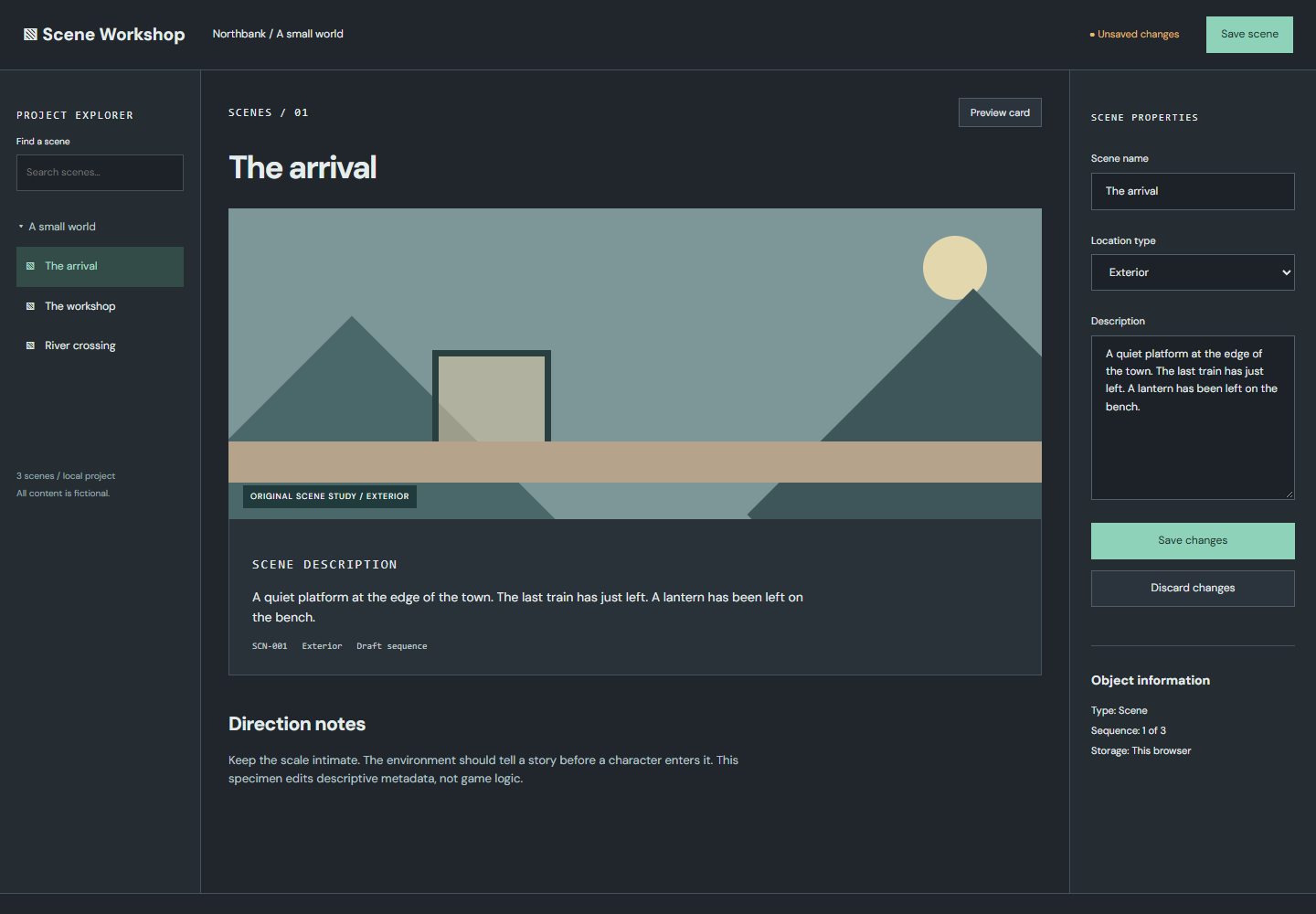
Specimen and flow. *Scene Workshop* contains a fictional collection of game scenes. Users select a scene, edit its descriptive metadata, and preview the resulting scene card. Supporting states show unsaved changes with a discard action and a search result that opens the matching object.
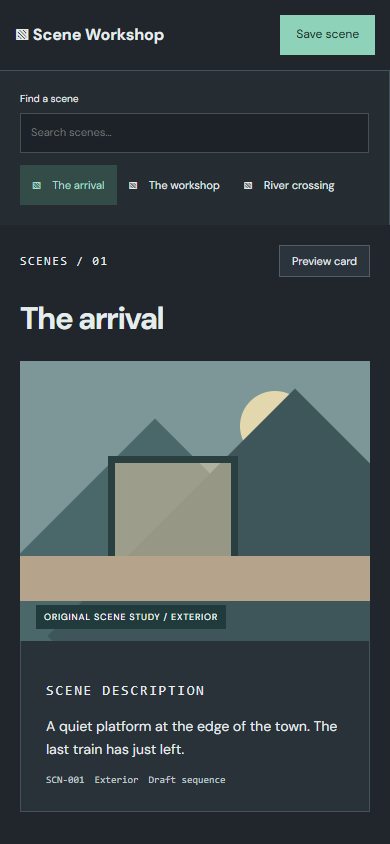
Adaptation and identity. Mobile converts panes into labelled views while preserving selection and edits. Preserve hierarchical context and the relationship between object and inspector; avoid turning the centre into a metrics dashboard or building a full code editor. Effort: medium.
Files for a coding model
Reference images
- Desktop — 1440 × 1000 viewport
- Phone — 390 × 844 viewport
- Supporting state — 1440 × 1000 viewport
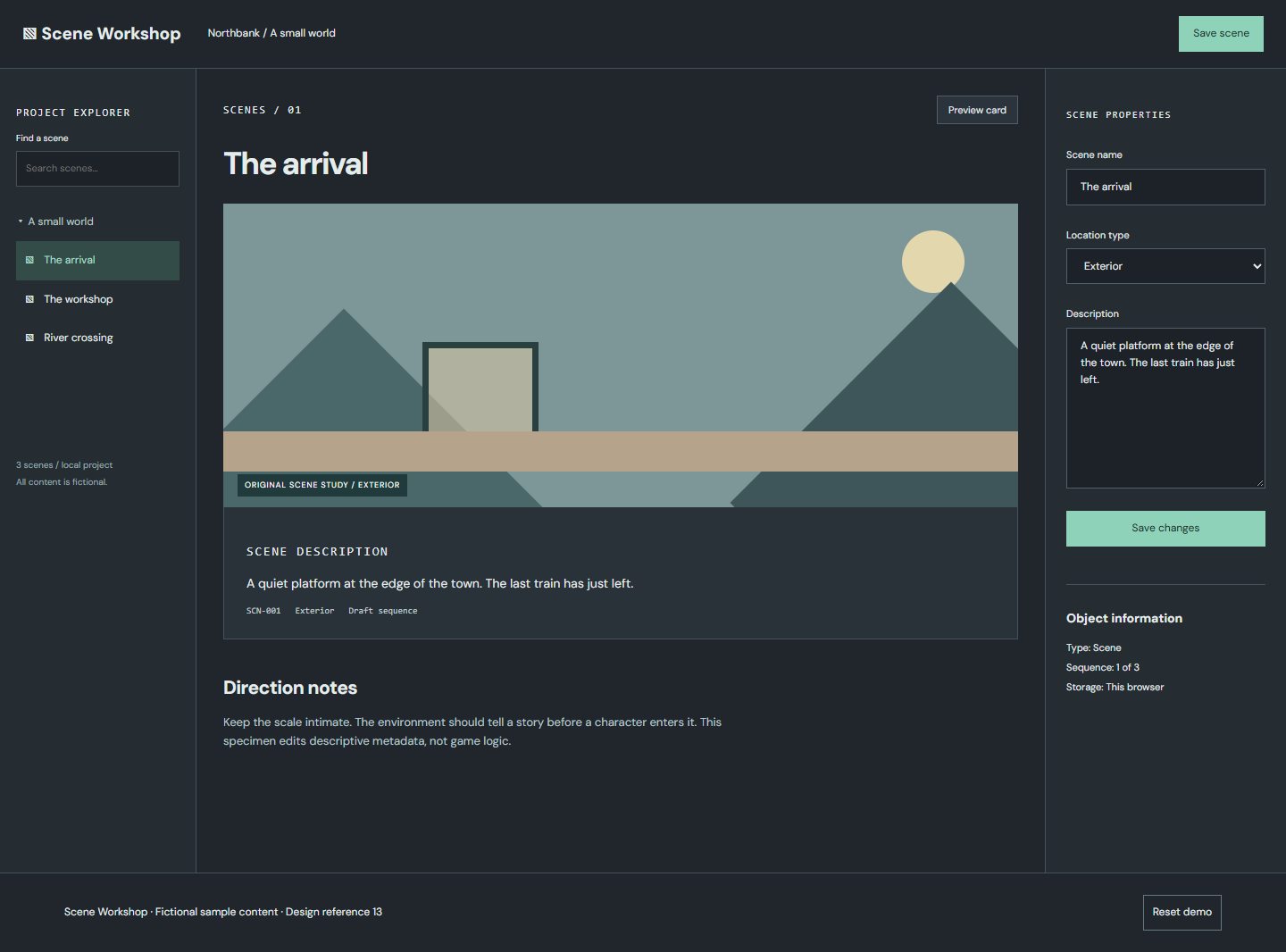
- Full page — 1440 × 1000 viewport
Supporting routes
Reuse
Use and adapt the original code and specifications for personal or commercial work under MIT. Keep applicable font and photo notices. The ZIP includes the complete runnable reference and its local assets.