Design reference 12 · Workspaces & discovery
Canvas Workspace
Make spatial arrangement part of thinking and organising.
Download design ZIP · Open interactive specimen
Design specification
Philosophy and fit. Make spatial arrangement part of thinking and organising. Suitable for planning boards, visual research, moodboards, and early concept development.
Visual grammar. Place an open working surface beneath a compact toolbar, with a collapsible item library and a small context inspector. Use a light dot grid, warm neutral notes, dark text, and distinct labelled item types. The canvas is the main composition; the surrounding interface stays visually quiet. Spatial groups, connections, and relative position carry meaning.
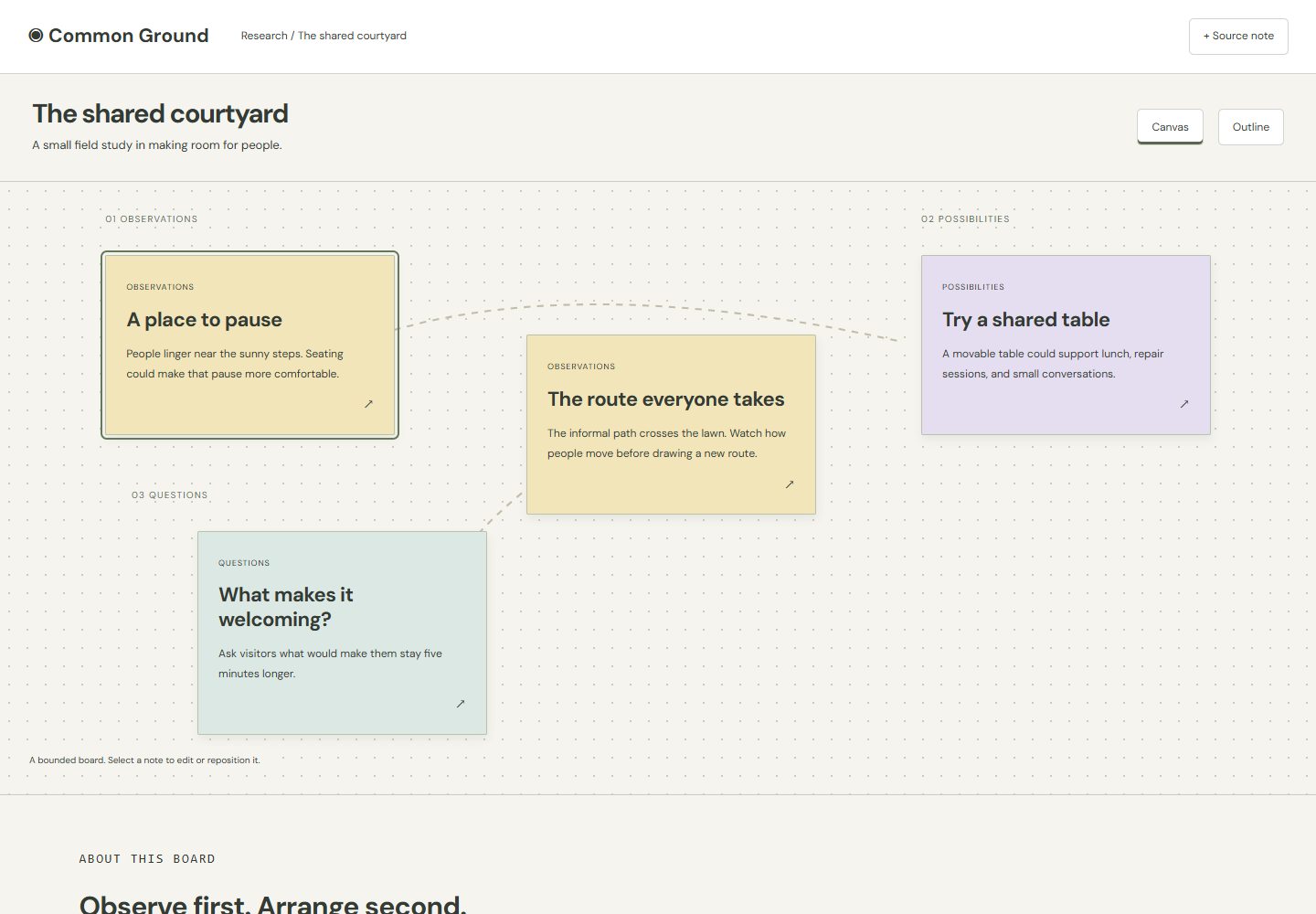
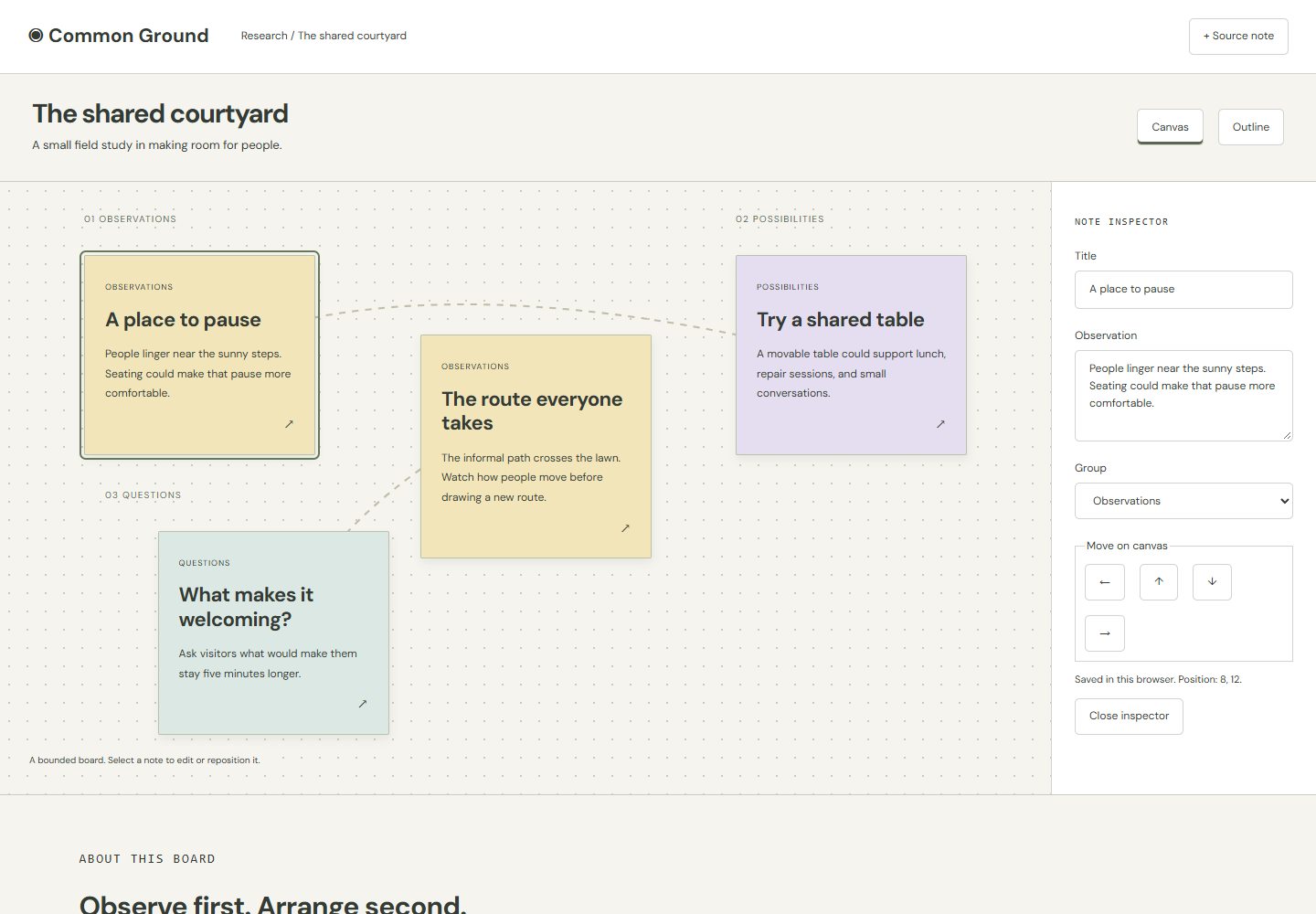
Specimen and flow. *Common Ground* provides a bounded fictional research board. Users add a source note, reposition it, and place it into a named group. Supporting states show a selected item's editable detail and a structured outline containing the same content.
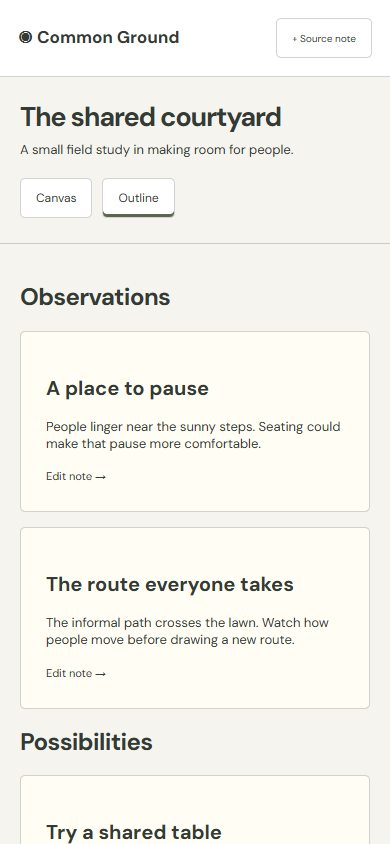
Adaptation and identity. Mobile defaults to the outline, with an optional canvas inspection mode. Every placement action also has keyboard and explicit-button controls. Preserve spatial relationships and a usable non-spatial view; avoid implementing an infinite rendering engine, requiring drag gestures, or hiding essential content off-screen. Effort: high.
Files for a coding model
Reference images
- Desktop — 1440 × 1000 viewport
- Phone — 390 × 844 viewport
- Supporting state — 1440 × 1000 viewport
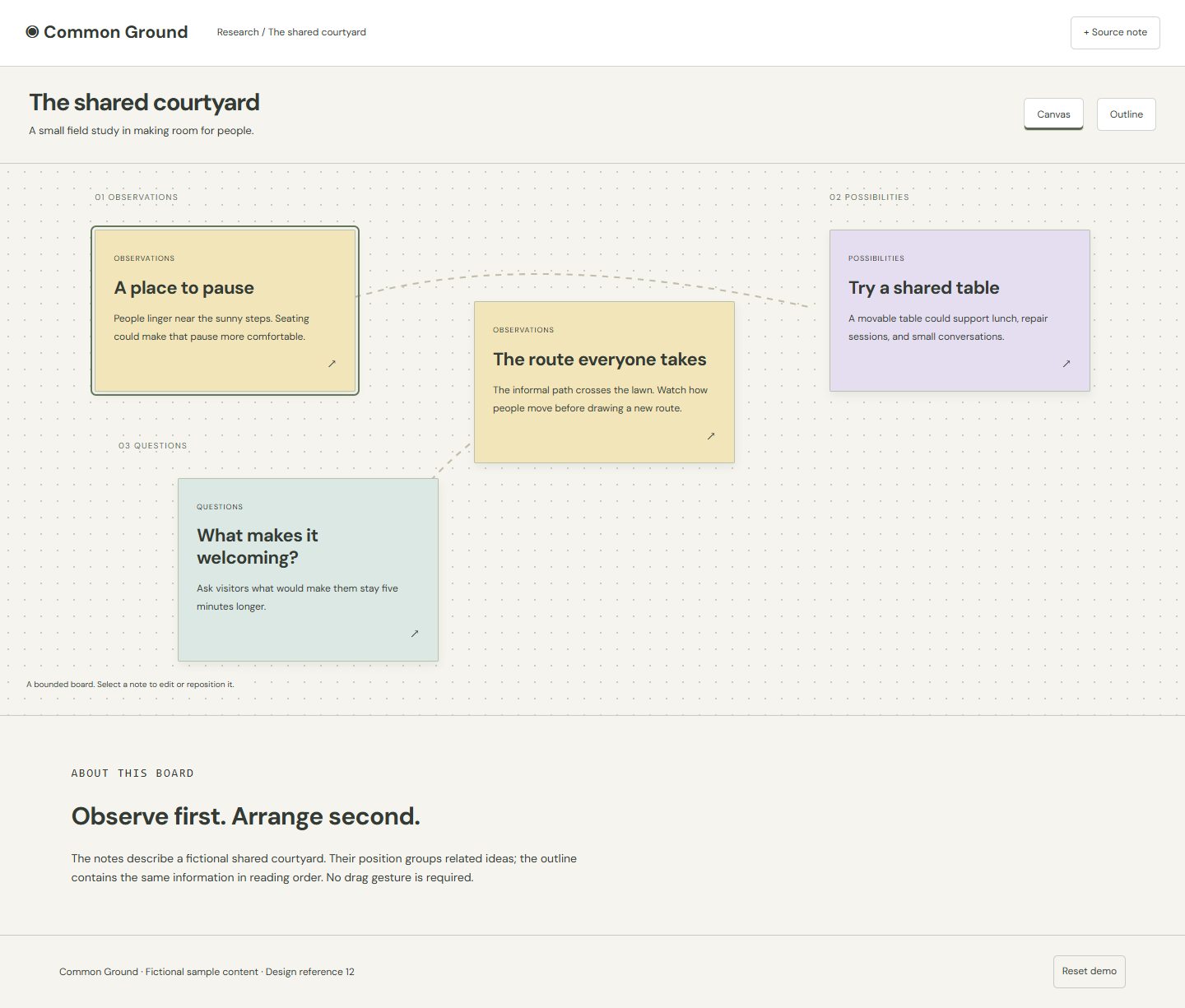
- Full page — 1440 × 1000 viewport
Supporting routes
Reuse
Use and adapt the original code and specifications for personal or commercial work under MIT. Keep applicable font and photo notices. The ZIP includes the complete runnable reference and its local assets.